
Recommended News
Hot News
Fill in your information
Electrical Safety Belts & Ropes for Power Work
Built for linemen, substation crews, and wind O&M teams, JINPOWER’s solution reduces fall risk and secondary injury through integrated fall arrest and impact control. High-tenacity polyester/nylon webbing rated to 15 kN (1.5 t) pairs with an alloy-steel dorsal D-ring, five-point load distribution, dual-locking hooks, and a dual-layer shock-absorbing back panel with thick pads. An anti-wear insert at the hook–rope interface elevates connection integrity and service life. Each unit is delivered with complete testing reports and a conformity tag for audit-ready compliance. Configure belts, ropes, pole straps, and rear lifelines to your task. Get specs, options, MOQ, and pricing today.


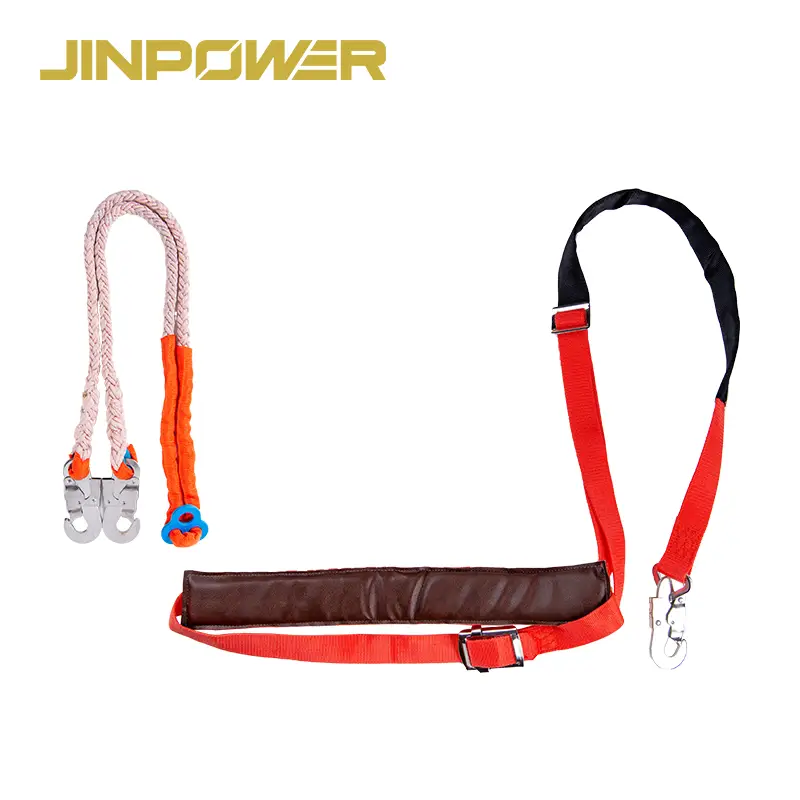

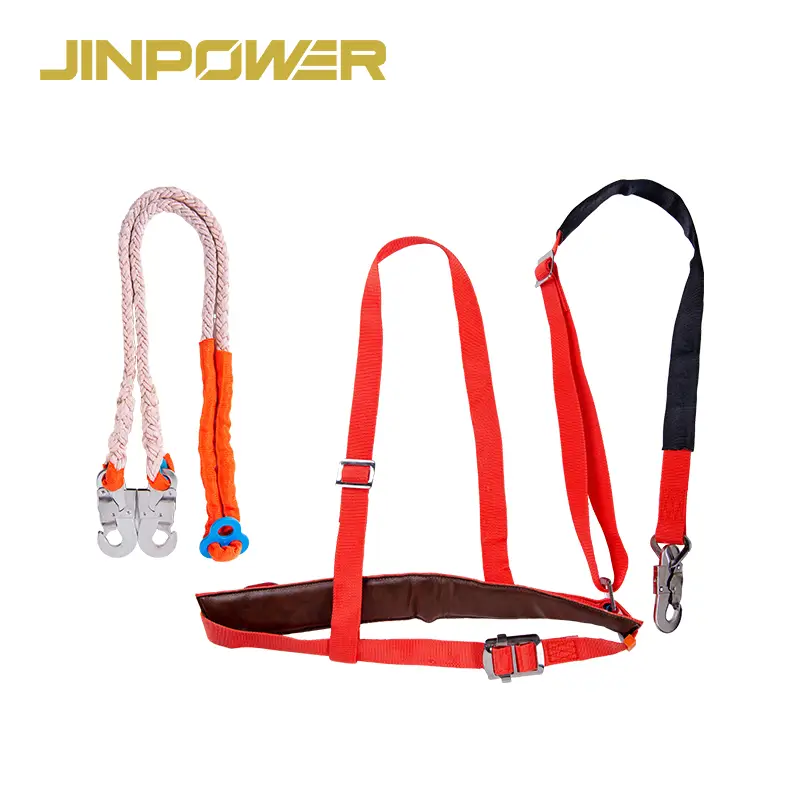

| Style | Material | Accessories | Colors |
|---|---|---|---|
| Wind-power safety belt | High-strength polyester | Pole strap, rear lifeline | Fluorescent yellow, red |
| Export full-body safety belt | High-strength nylon | Chrome-plated buckles, metal-ring safety rope | Blue (customizable) |
| Full-body safety belt | High-strength nylon | Chrome-plated buckles, metal-ring safety rope | Orange, blue |
| Electrician single-waist belt | High-strength nylon | Chrome-plated buckles, metal-ring safety rope | Orange, blue |
| Single-back, double-lock safety belt | High-strength nylon | Chrome-plated buckles, metal-ring safety rope | Orange, blue |
| Double-back, double-lock safety belt | High-strength nylon | Chrome-plated buckles, metal-ring safety rope | Orange, blue |
Solution Comparison
Fall Arrest vs. Work Positioning
- Fall Arrest: Full-body harness with dorsal attachment to stop a fall after it begins and to dissipate impact. Choose this when crews face an exposed edge, tower ascent/descent, scaffold access, or any task with a credible fall distance. Pair with an energy-absorbing lanyard or approved connecting device.
- Work Positioning: Belt or harness that holds the worker in place to free both hands for the job. Use for pole/tower work, substation maintenance at fixed height, or wind O&M tasks where the worker is supported against a structure. Positioning alone does not replace fall arrest—if a fall hazard exists, you need both.
Dielectric vs. Standard Hardware
- Dielectric (non-conductive): For energized or near-energized environments (substations, switchyards, live-line adjacency). Non-conductive/insulated hardware helps reduce unintended electrical pathways and complements site grounding controls.
- Standard (metal hardware): For de-energized mechanical work and general plant maintenance where electrical exposure is controlled.
Selection rule of thumb: choose dielectric when crews operate inside approach boundaries defined by your electrical safety rules; otherwise, standard hardware is acceptable. Always follow your site procedures and local regulations.
Selection Guide
Use this quick guide to map your electrical safety belt configuration to real job scenarios. It focuses on outcomes, not model codes.
| Scenario | Recommended Type | Dielectric? | Lanyard Setup | Attachments | Key Parameters | Compliance Note |
|---|---|---|---|---|---|---|
| Tower/pole climbing with exposed edges | Full-body fall-arrest harness (five-point) | Optional (use if within approach boundaries) | Twin-tail energy-absorbing lanyard for continuous tie-off | Pole strap: Yes; Rear lifeline: Optional | High-tenacity polyester/nylon, 15 kN (1.5 t); dorsal alloy-steel D-ring; dual-locking hooks; shock-absorbing back panel + thick pads; anti-wear insert | Testing reports available; conformity tag supplied |
| Substation/switchyard near energized equipment | Full-body fall-arrest harness | Yes — dielectric hardware | Single or twin-tail energy-absorbing lanyard (per procedure) | Pole strap: Optional; Rear lifeline: Optional | Same as above; prioritize non-conductive components where required | Follow site electrical safety rules and local regulations |
| De-energized plant maintenance at height | Full-body fall-arrest; add positioning belt if hands-free work needed | Not required | Single energy-absorbing lanyard or positioning rope (per task) | Typically not required | Same as above | Use approved anchorage and review work permit |
| Wind turbine O&M (tower/nacelle) | Full-body fall-arrest (five-point) | Optional (per proximity to live parts) | Twin-tail energy-absorbing lanyard | Pole strap: Yes; Rear lifeline: Yes | Same as above; emphasis on continuous tie-off capability | Observe site-specific rescue & evacuation plan |
| Ladder/scaffold access with intermittent edges | Full-body fall-arrest | Optional | Single energy-absorbing lanyard | None | Same as above | Use edge protection per method statement |
Technical Highlights
Load distribution & impact control
Five-point full-body support spreads forces across shoulders, waist, and legs, helping the system dissipate impact rather than concentrating it on a single point. A dual-layer shock-absorbing back panel with thick pads adds a second buffer to reduce peak loads during a fall event and improves wear comfort during long shifts.
Materials & strength
High-tenacity polyester/nylon webbing delivers abrasion resistance and moisture tolerance with a rated tensile of 15 kN (1.5 t)—a solid baseline for electrical works at height. The construction balances rigidity for support with flexibility for movement.
Connection security & anti-slip
An alloy-steel dorsal D-ring provides a reliable primary anchorage point. Dual-locking hooks (inner + outer latch) mitigate accidental opening under load or vibration. An anti-wear insert between hook and rope protects fibers from edge abrasion, extending service life.
Documentation & traceability
Each unit is supplied with complete testing reports and a conformity tag, enabling straightforward acceptance, audit checks, and maintenance records across teams and sites.
Attachments & Kits
Standardize your crews with compatible add-ons that turn the electrical safety belt into a ready-to-deploy set for real jobs.
Safety ropes & energy-absorbing lanyards
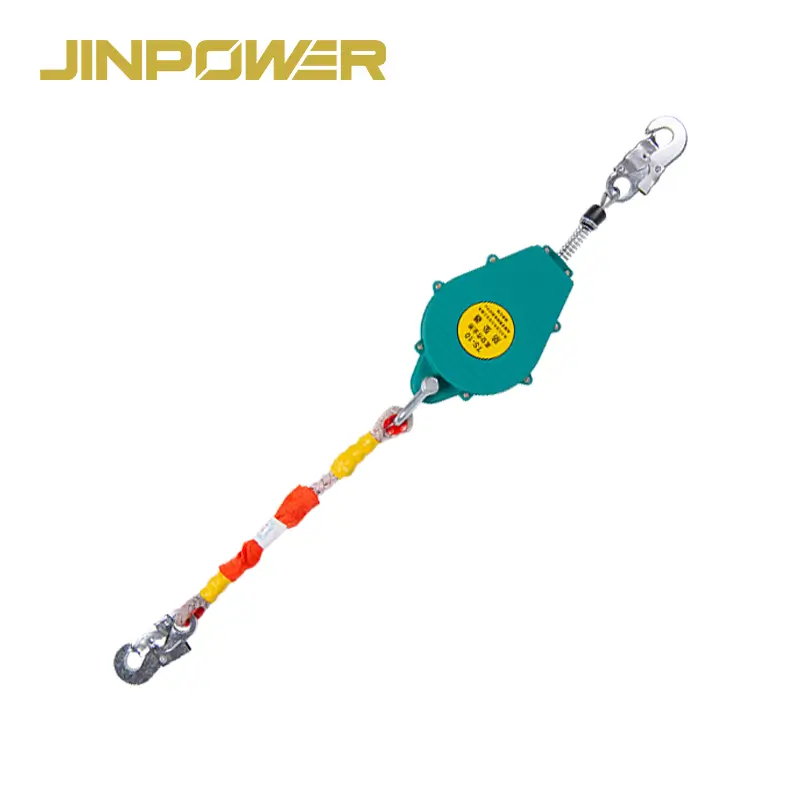
Single or twin-tail options support continuous tie-off. Dual-locking hooks secure every connection, while an anti-wear insert between hook and rope protects fibers, extending service life without adding bulk.
Pole strap (work positioning)
Wrap-around strap for pole/tower work to free both hands. Used with side/waist attachment points while the dorsal connection remains your primary fall-arrest link.
Rear lifeline
A rear connection rope that complements tower ascent/descent routines. It assists orderly connection management and should be paired with the main fall-arrest device where a fall hazard exists.
Kit templates (no model codes)
| Kit Template | Primary Use Case | Components | Notes |
|---|---|---|---|
| Fall-Arrest Starter | General height work with edges | Full-body belt + single energy-absorbing lanyard | 15 kN (1.5 t) webbing, dorsal alloy-steel D-ring |
| Continuous Tie-Off | Tower/pole climbing | Full-body belt + twin-tail energy-absorbing lanyard | Dual-locking hooks; anti-wear insert at hook–rope |
| Positioning Add-On | Fixed-height maintenance | Pole strap + optional rear lifeline | Positioning does not replace fall arrest |
| Wind O&M Set | Turbine ascent/nacelle access | Full-body belt + twin-tail lanyard + pole strap + rear lifeline | Five-point load distribution; shock-absorbing back panel with thick pads |
OEM / Customization
Align the electrical safety belt to your job profile without dragging model codes into the decision. Configure only from the verified elements you approved.
- Webbing material: high-tenacity polyester or nylon (baseline tensile up to 15 kN / 1.5 t).
- Attachment & hardware: alloy-steel dorsal D-ring; dual-locking hooks; chrome-plated buckles with metal-ring safety rope.
- Impact management: five-point load distribution with dual-layer shock-absorbing back panel and thick pads.
- Interface durability: anti-wear insert between hook and rope.
- Colorways: fluorescent yellow, red, blue, orange/blue; selected items support color customization.
- Accessory set-up: add safety rope, pole strap, and rear lifeline to build a ready-to-deploy kit.
- Documentation: each unit ships with complete testing reports and a conformity tag.
Price & MOQ
To address electrical safety belt price with procurement clarity, we price by configuration rather than model codes. The total landed cost is driven by:
- Harness architecture: full-body (five-point) vs. single-waist vs. double-security designs.
- Hardware profile: dielectric vs. standard alloy-steel components.
- Lanyard setup: single vs. twin-tail; with/without energy absorber.
- Impact & comfort package: dual-layer shock-absorbing back panel, thick pads, five-point load distribution.
- Interface durability: anti-wear insert at hook–rope contact.
- Webbing material & colorways: high-tenacity polyester/nylon; stock vs. custom colors.
- Accessory bundle: safety rope, pole strap, rear lifeline (kit vs. individual items).
- Documentation set: testing reports (copies), conformity tags, serialized labeling.
- Order structure: quantity brackets, packaging, consolidation, delivery region & Incoterms.
MOQ policy (guiding logic)
- Standard colors/specs support lower MOQs.
- Custom colors/packaging require higher MOQs due to dye-lot and print runs.
- Bundled kits (belt + lanyard + pole strap/rear lifeline) optimize per-set logistics and QC.
RFQ template (copy & send back)
- Application scenario (tower/pole, substation, wind O&M, plant maintenance)
- Required protection: Fall Arrest / Work Positioning / Both
- Dielectric hardware: Yes/No
- Lanyard: Single / Twin-tail, with energy absorber: Yes/No
- Accessories: Safety rope / Pole strap / Rear lifeline
- Webbing: Polyester / Nylon; Color (stock or custom)
- Size range & quantity by size (if applicable)
- Documentation: testing report copies Yes/No, labeling language
- Packaging (individual set / bulk)
- Delivery: destination, preferred Incoterms, target date
Cost-control levers
Standardize on a single colorway, choose standard hardware where energized proximity does not apply, and consolidate accessories into kits to reduce handling and freight.




 Hrvatski
 Čeština
 Dansk
Dansk Nederlands
 Filipino
 Français
 Deutsch
 Italiano
 日本語
日本語 Қазақ тілі
 ភាសាខ្មែរ
 한국어
한국어 Кыргызча
 ພາສາລາວ
 Монгол
 فارسی
فارسی Polski
 Português
 Română
 Русский
 Slovenščina
 Español
 Kiswahili
 ไทย
ไทย Українська
 Tiếng Việt
 English