
Recommended News
Hot News
Fill in your information
25kV and 35kV Insulated Boots for Utility and Industrial Work
JINPOWER insulated rubber boots are supplied in 25kV and 35kV models for buyers who need reliable dielectric footwear for utility operations, substation work, outdoor electrical maintenance, and industrial power environments. These boots combine electrical insulation, waterproof construction, slip-resistant grip, and practical field durability for teams working in demanding conditions.
You can choose the 25kV model for routine high-voltage field work and the 35kV model for higher-risk environments where additional insulation margin is preferred. For project buyers, distributors, and contractor teams, JINPOWER also supports bulk inquiry communication, sizing coordination, OEM discussion, and export-oriented order handling.
Need help choosing between 25kV and 35kV insulated boots?
Ask for technical details, request a bulk quote, or discuss OEM options with JINPOWER.
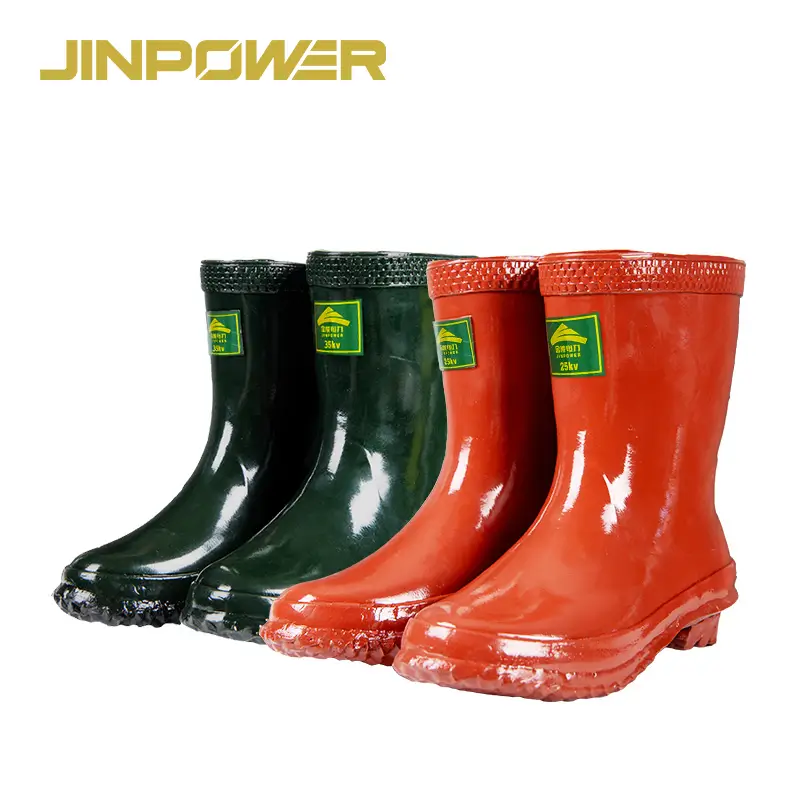
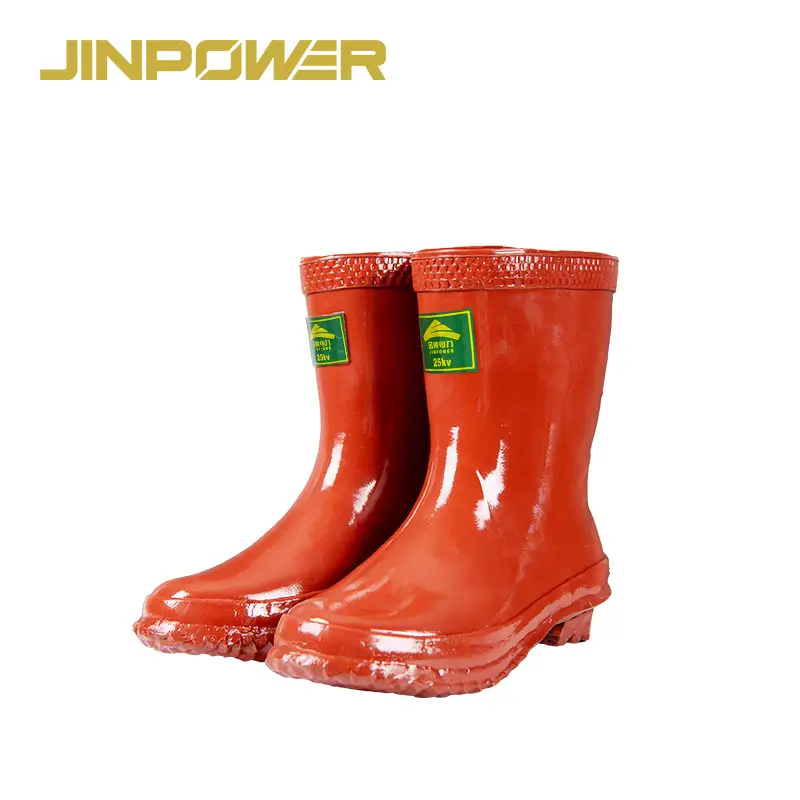

Why Insulated Boots Matter in Electrical Work
Insulated safety boots are designed to reduce the risk of current passing through the worker to ground during electrical operations. For utility teams, contractors, and industrial maintenance crews, they are not ordinary work boots. They are part of a broader PPE system used in environments where wet surfaces, unstable ground, outdoor exposure, or proximity to energized equipment increase electrical risk.
For buyers, the key point is simple: insulated boots help turn footwear selection into a controlled safety decision rather than a general workwear purchase. That is why voltage class, sole design, waterproof performance, and field suitability matter when choosing between different models.
25kV vs 35kV Insulation Boots: Product Range Overview
At JINPOWER, we offer two voltage-rated models of insulated rubber boots—25kV and 35kV—to meet different levels of operational risk and worksite requirements. Both models are engineered for full-body electrical isolation and tested to withstand harsh utility, substation, and field conditions.
Product Comparison Table
Not sure which model fits your project better? Start with the actual work environment, the level of electrical exposure, and the type of field movement your crew performs. In most cases, the 25kV model is suited to routine high-voltage maintenance and general utility operations, while the 35kV model is preferred where higher insulation margin, harsher site conditions, or more demanding substation and transmission tasks are involved.
| Specification | 25kV Insulation Boots | 35kV Insulation Boots |
|---|---|---|
| Test Voltage (AC 1 min) | 25,000V | 35,000V |
| Working Voltage Range | Up to 17kV live exposure | Up to 26kV live exposure |
| Primary Applications | Distribution networks, general fieldwork | Substations, transmission systems, EHV maintenance |
| Sole Design | Anti-slip rubber outsole, oil-resistant | Heavy-duty anti-slip outsole with deeper tread |
| Upper Construction | Molded rubber, waterproof, lightweight | Reinforced upper for extended wear and weather durability |
| Available Sizes (EU) | EU 39–45 | EU 39–45 |
| US Size Range (approx.) | US Men’s 6–11.5 | US Men’s 6–11.5 |
| UK Size Range (approx.) | UK Men’s 5.5–11 | UK Men’s 5.5–11 |
| Color Options | Standard black (custom color optional) | Black with optional red/blue outsole for voltage ID |
If your team is handling routine outdoor inspections, grid maintenance, or general utility work, the 25kV model offers a practical balance of insulation and mobility. If your work involves substations, transmission environments, wet switchyards, or higher-risk electrical zones, the 35kV model provides a stronger positioning for projects that require additional protection margin.
Each pair can be prepared for export-oriented orders with sizing identification and order coordination support, helping buyers manage procurement more efficiently across teams and projects.
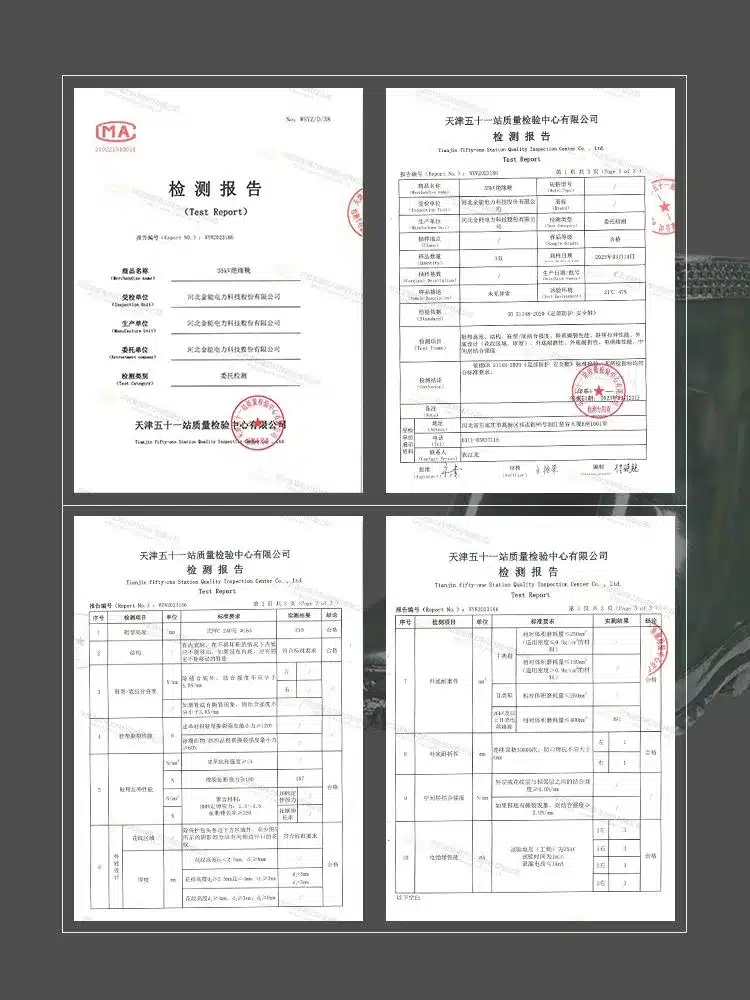

How to Choose Between 25kV and 35kV Insulated Boots
Choosing the right insulated boot is not only about the voltage number printed on the product. Buyers should also consider the actual worksite conditions, the type of maintenance task, the terrain underfoot, and how the boots will be used together with other electrical PPE.
In many utility and industrial projects, 25kV insulated boots are selected for routine field operations where flexibility and lighter movement are important. The 35kV model is more often considered for higher-risk environments, including substations, transmission-related work, and sites where buyers want a greater insulation margin as part of the PPE plan. If your project team needs guidance, JINPOWER can help narrow the choice before order placement.
Key Features and Procurement Value
Electrical Protection for Demanding Work Environments
Each model is positioned for electrical work where insulated footwear must support a wider PPE system. For buyers, this means clearer selection between 25kV and 35kV options and more confidence when matching footwear to field risk level, maintenance scope, and worksite conditions.
Slip Resistance and Practical Ground Stability
The outsole design supports grip on wet ground, gravel, ladders, and uneven surfaces commonly found in utility and industrial environments. This matters for procurement because electrical safety footwear must protect not only against electrical risk, but also against common movement-related hazards in the field.
Waterproof and Weather-Ready Construction
The boot body is designed for outdoor use where rain, mud, and difficult ground conditions are part of normal work. For project buyers, this improves suitability across different operating regions and reduces the need to split purchasing across multiple basic boot types.
Wearability for Long Shifts
A practical fit, supportive shaft structure, and field-oriented construction help make the boots more suitable for teams who work extended shifts in substations, distribution systems, and outdoor electrical sites. This is important when procurement decisions are made for full crews rather than for single-user replacement.
Inspection and Documentation Support
For project buyers and distributors, insulated boots are not only a product decision, but also a documentation and order-management decision. JINPOWER supports pre-order communication on model selection, sizing coordination, export packing preparation, and order identification for different teams or delivery batches.
Where required, we can also support practical communication around product records, order labeling, and procurement matching so that buyers can manage electrical safety footwear more clearly across projects, crews, and distribution needs.
Application Scenarios in the Power & Utility Sector
JINPOWER’s insulated lineman boots are trusted by utility crews, electrical contractors, and field operators working under some of the most dangerous electrical conditions. From routine line inspections to emergency fault repairs, our 25kV and 35kV insulation boots provide the protection you need—every step of the way.
Typical Use Cases
These boots are selected for more than one type of site. The right model depends on the level of electrical exposure, the ground condition, and how frequently the crew works in outdoor or high-risk environments.
| Application Area | Function of Insulated Boots |
|---|---|
| Power Transmission & Distribution Lines | Isolate ground current during pole climbing or aerial maintenance |
| Substation Operations | Protect workers inspecting switchgear, busbars, and live conductors |
| Outdoor Switchyards & Ring Main Units | Prevent grounding accidents in wet, unstable, or chemically exposed ground surfaces |
| Utility Field Service Crews | Ensure compliance during meter replacement, transformer checks, and cable routing |
| Power Plant Maintenance (Thermal/Hydro) | Safeguard against contact with energized terminals and oil-contaminated walkways |
| Telecom & Signal Maintenance | Prevent stray current injury while accessing towers and underground cabinets |
| Railway Electrification and OCS Systems | Insulate against return current paths in catenary or traction systems |




 Hrvatski
 Čeština
 Dansk
Dansk Nederlands
 Filipino
 Français
 Deutsch
 Italiano
 日本語
日本語 Қазақ тілі
 ភាសាខ្មែរ
 한국어
한국어 Кыргызча
 ພາສາລາວ
 Монгол
 فارسی
فارسی Polski
 Português
 Română
 Русский
 Slovenščina
 Español
 Kiswahili
 ไทย
ไทย Українська
 Tiếng Việt
 English