
Recommended News
Hot News
Fill in your information
Flexible Copper Earthing Cables for Temporary Earthing and Short-Circuiting
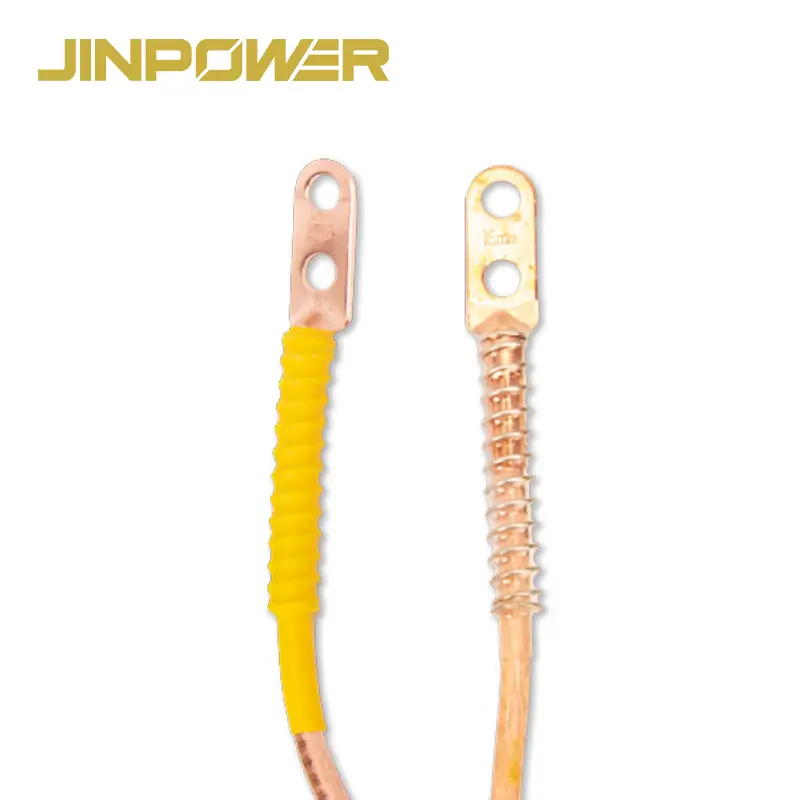
JINPOWER supplies flexible copper earthing cables and grounding leads for temporary earthing and short-circuiting applications. Our product options include stranded copper cables, braided copper conductors, protective sheaths, and project-specific cable terminations.
These cables are intended for portable earthing equipment used during approved maintenance on isolated or de-energized electrical installations, including substations, overhead distribution networks, industrial switchgear, and utility power systems.
For professional buyers, choosing the correct copper grounding wire involves more than conductor size. Cable cross-section, short-circuit current, rated duration, cable length, termination quality, and clamp compatibility must all be considered before approving an assembly.
We support project-based cable specifications, termination configurations, identification requirements, and bulk supply for utilities, contractors, distributors, and industrial buyers.
Key Product Features
- Flexible Copper Conductors: Braided or stranded constructions for different handling and routing requirements.
- Cable Size and Short-Circuit Duty: Cross-section and electrical performance selected according to the required application.
- Termination Options: Copper lugs, ferrules, and compatible clamp connections.
- Protective Sheaths: PVC, elastomer, and other material options subject to the required specification.
- Project Identification: Cable length markings, batch identification, colour coding, and available documentation.
- Custom Assemblies: Cable lengths, terminal configurations, clamps, and accessories based on project requirements.
Request a Technical Quotation
Send us your required cable cross-section (mm²), short-circuit current (kA), rated duration (s), cable length, termination type, applicable standard, and order quantity.
We can then review the available cable configurations, compatible components, and technical documentation for your project.



Applications & Use Cases
Copper earthing cables are used in portable earthing and short-circuiting equipment for utilities, industrial installations, and electrical maintenance projects.
The cable and complete assembly must be suitable for the prospective fault current, connection points, and approved work procedure.
Substations & Switchyards
Flexible copper earthing leads can be configured for temporary earthing and short-circuiting during approved substation maintenance.
Cable cross-section, short-circuit withstand capability, clamp interface, and lead length must match the equipment and site requirements.
Overhead Transmission & Distribution
Portable earthing leads are used in approved maintenance procedures for overhead transmission and distribution networks.
Flexible copper conductors can support routing between designated connection points. Buyers should confirm conductor construction, cable length, applicable electrical rating, and compatible line or structure clamps.
Industrial Power Systems
Industrial plants may require temporary earthing assemblies during maintenance of switchgear, transformers, motor control centres, and other electrical installations.
Cable selection should follow the site’s prospective short-circuit current, rated duration, connection geometry, and approved electrical safety procedure.
Rail & DC Traction Power
Rail electrification and traction systems may require project-specific earthing leads for temporary bonding and maintenance.
For these applications, conductor cross-section, AC/DC fault conditions, connection materials, corrosion exposure, and approved railway procedures should be reviewed before selecting the cable assembly.
Renewables & BESS Yards
Renewable energy installations, inverter stations, transformer facilities, and battery energy storage projects may require temporary earthing during approved maintenance.
Buyers should verify the actual electrical configuration, prospective fault current, DC or AC requirements, cable interfaces, and site-specific maintenance procedures.
A general-purpose AC earthing assembly should not automatically be considered suitable for every DC application.
Contractor & OEM Kits
EPC contractors, utilities, and maintenance providers may require multiple cable lengths, conductor sizes, and clamp configurations for different projects.
JINPOWER can discuss pre-terminated cable assemblies, identification labels, storage reels, and project-specific component combinations according to an approved technical specification.
For complete equipment configurations, see our Portable Earthing and Short Circuit Kits.
Conductor Architecture & Materials
Copper earthing cable performance depends on conductor construction, cross-section, flexibility, termination design, and the electrical and mechanical requirements of the application.
JINPOWER provides copper conductor options for portable earthing projects. The final construction should be selected according to the required cable handling, fault-current duty, and connection system.
Braided Copper Ground Wire
Braided copper conductors are often considered where flexible routing and repeated cable handling are important.
They may be suitable for applications requiring the cable to follow restricted paths or connect to equipment with limited working space.
Key considerations include:
- Copper strand construction and cross-section
- Braided conductor geometry
- Bending and handling requirements
- Compatibility with lugs and ferrules
- Mechanical protection at cable terminations
- Verified electrical performance
Braided construction can provide practical flexibility, but it should not automatically be considered superior in electrical rating or mechanical durability to every stranded cable design.
Rope-Lay Stranded (Round)
Round stranded copper conductors provide another option for portable earthing leads.
This construction can be considered where buyers require a round cable profile, defined conductor flexibility, compatible termination systems, and controlled handling on storage reels.
Selection should consider:
- Conductor cross-section
- Strand arrangement
- Minimum permitted bending radius
- Cable weight and length
- Termination compatibility
- Required electrical and mechanical performance
The choice between braided and round stranded copper should be based on the finished cable specification rather than conductor shape alone.
Bare, Tinned, or Aluminum (by Application)
Bare Copper
Bare copper provides a conductive connection where the conductor construction and environmental conditions are suitable.
For portable earthing assemblies, buyers must confirm compatibility with the selected terminations, clamps, and connection materials.
Tinned Copper
Tinned copper may be considered where additional corrosion resistance or specific connection requirements are important.
Actual suitability depends on the operating environment, conductor specification, and connection design.
Aluminum Conductors
Aluminum conductor options require separate technical evaluation.
Aluminum must not be treated as a direct replacement for an approved copper earthing cable without checking electrical capacity, mechanical properties, connector materials, corrosion compatibility, and the applicable standard.
Terminations & Interfaces
A grounding cable must work together with its ferrules, lugs, clamps, and approved connection points.
JINPOWER can discuss different termination configurations, including:
- Crimped copper ferrules
- One-hole and two-hole copper lugs
- Bolted connection interfaces
- Compatible quick-disconnect systems
- Cable-to-clamp connections
- Optional strain-relief protection
Termination quality is as important as conductor cross-section.
A cable with an appropriate conductor size may still be unsuitable if its ferrule, lug, or clamp connection does not meet the required electrical and mechanical performance.
For a more detailed explanation, read our Grounding Cable Terminations Guide.
Insulation & Jacket
Protective cable sheaths are commonly used on portable earthing leads to improve visibility, reduce mechanical damage, and protect the conductor under specified service conditions.
However, a jacketed earthing cable is not a live-working insulated cable intended to protect users against contact with energized conductors.
IEC 61138 applies to specified flexible cables for portable earthing and short-circuiting equipment. These cables are not assigned a rated voltage in the same way as conventional power cables because their intended function is temporary earthing and short-circuiting.
What the Jacket Does for You
A suitable protective sheath may provide the following advantages:
- Visibility: Clear identification of cable routes and equipment.
- Mechanical Protection: Protection against specified abrasion and handling conditions.
- Environmental Suitability: Material selection for the expected temperature, moisture, and operating environment.
- Cable Identification: Colour coding, length markings, and traceability information.
- Maintenance: Easier inspection of the external cable condition.
The actual protective properties depend on the selected sheath material and verified product construction.
Material Options
PVC
PVC-based cable constructions may be suitable for industrial applications where the required mechanical, temperature, and environmental properties are met.
Elastomer / Rubber
Elastomer-based sheaths can be considered where flexibility and specified mechanical performance are important.
Silicone Rubber
Silicone rubber constructions may be required for particular temperature or flexibility conditions, depending on the applicable specification.
Other Project-Specific Materials
Alternative materials such as LSZH or TPU may be discussed for specific applications, but their suitability and compliance must be confirmed separately.
Where EN/IEC 61138 compliance is required, the proposed cable construction must fall within the standard’s applicable material and testing requirements.
Colour & Identification
Cable identification options may include:
- High-visibility sheath colours
- Phase or connection-point identification
- Printed cable length
- Model and conductor cross-section markings
- Batch or serial identification
- Barcode or QR-code labels
- Project-specific equipment identification
Colour alone should not be used to determine the electrical rating or intended connection of a portable earthing lead.
Interface Integrity
The transition between the flexible cable and its termination is a critical area.
Buyers should check for:
- Correct ferrule or lug dimensions
- Suitable crimping or mechanical connection
- No visible broken strands
- No loose or damaged fittings
- Appropriate strain relief where specified
- Compatible connection materials
- Verified assembly continuity and mechanical integrity
Where required, the manufacturer should provide relevant inspection records and test evidence for the specified configuration.
Cable Sizes, Short-Circuit Ratings and Selection
The correct copper earthing cable should be selected according to the prospective short-circuit current, required withstand duration, conductor construction, cable length, and connection arrangement.
For European projects, conductor cross-section is normally specified in square millimetres (mm²).
AWG may still be used for international enquiries, but it should not be the primary basis for selecting a protective earthing cable.
Conductor Cross-Section
Commonly requested cable cross-sections in portable earthing applications include:
- 16 mm²
- 25 mm²
- 35 mm²
- 50 mm²
- 70 mm²
- 95 mm²
These are reference sizes for technical enquiries. Actual JINPOWER availability, conductor construction, and suitability must be confirmed for each model.
A larger conductor cross-section does not, by itself, establish the short-circuit rating of a finished earthing assembly.
Short-Circuit Rating and Technical Selection
When sourcing a copper earthing cable, buyers should confirm the following information:
| Technical Parameter | What Buyers Should Confirm |
|---|---|
| Conductor Cross-Section | Required size in mm² |
| Conductor Construction | Braided or stranded copper |
| Short-Circuit Current | Required rated current in kA |
| Rated Duration | Required withstand time in seconds |
| Peak Current | Required peak-current capability where applicable |
| Cable Length | Required finished lead length |
| Cable Material | Bare or tinned copper |
| Protective Sheath | Required material and environmental properties |
| Termination Type | Ferrule, lug, or approved connection interface |
| Clamp Compatibility | Connection geometry and electrical rating |
| Applicable Standard | Required IEC/EN or project specification |
| Test Documentation | Relevant electrical and mechanical test evidence |
Short-circuit performance must be verified for the specified product and assembly.
Do not calculate or claim the rated current of a finished grounding set from cable cross-section alone without considering the complete construction and applicable testing requirements.
Braided vs Stranded Copper: Which Should You Choose?
| Selection Factor | Braided Copper | Stranded Copper |
|---|---|---|
| Construction | Braided strands | Round stranded construction |
| Handling | Can suit flexible routing | Can suit general cable routing and reel storage |
| Terminations | Must match braid geometry | Must match strand construction |
| Mechanical Performance | Verify by actual product design | Verify by actual product design |
| Short-Circuit Rating | Requires confirmed data | Requires confirmed data |
| Suitable Applications | Depends on project specification | Depends on project specification |
Neither construction should be assumed to have a higher electrical rating simply because of its shape.
Selection Checklist
Before ordering, confirm:
- Required short-circuit current and rated duration.
- Conductor cross-section and construction.
- Cable length and routing conditions.
- Compatible ferrules, lugs, and clamps.
- Required sheath material and identification.
- Applicable technical standard.
- Required test reports and acceptance documents.
JINPOWER can review these requirements and help identify available cable assembly configurations for technical approval.
System Solution: Clamps, Connectors, Ground Rods & Reels
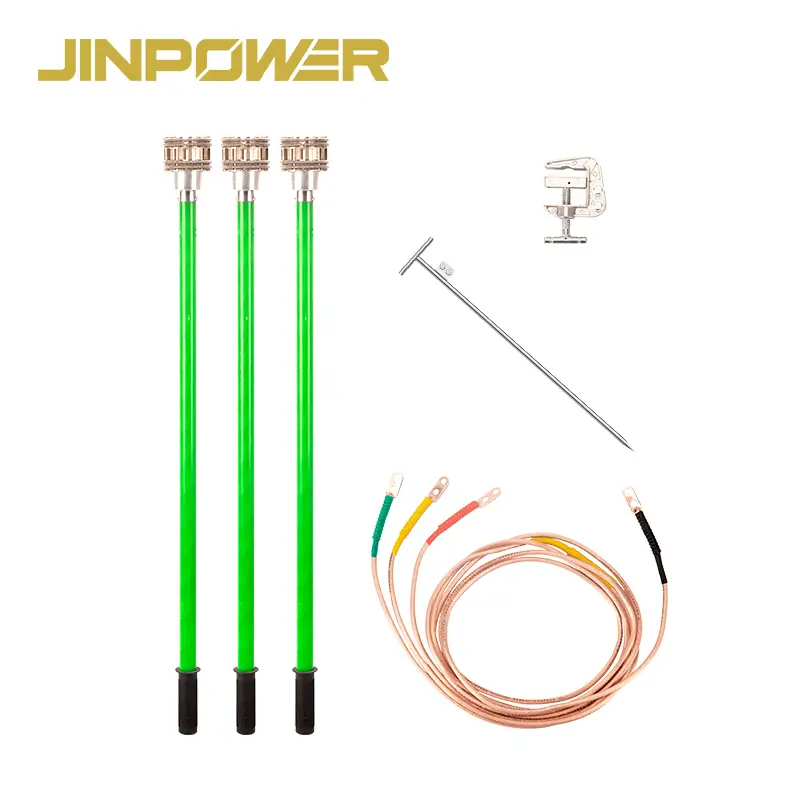
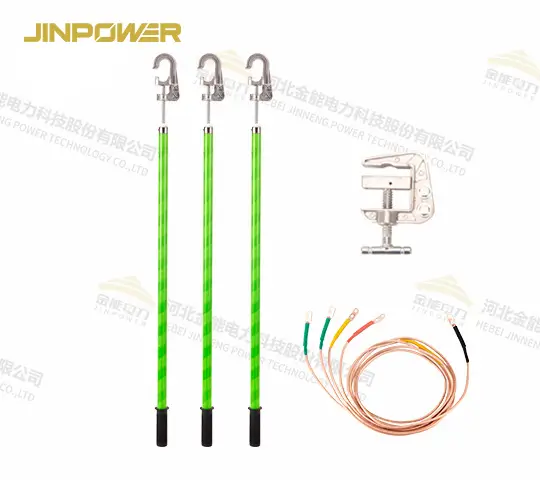
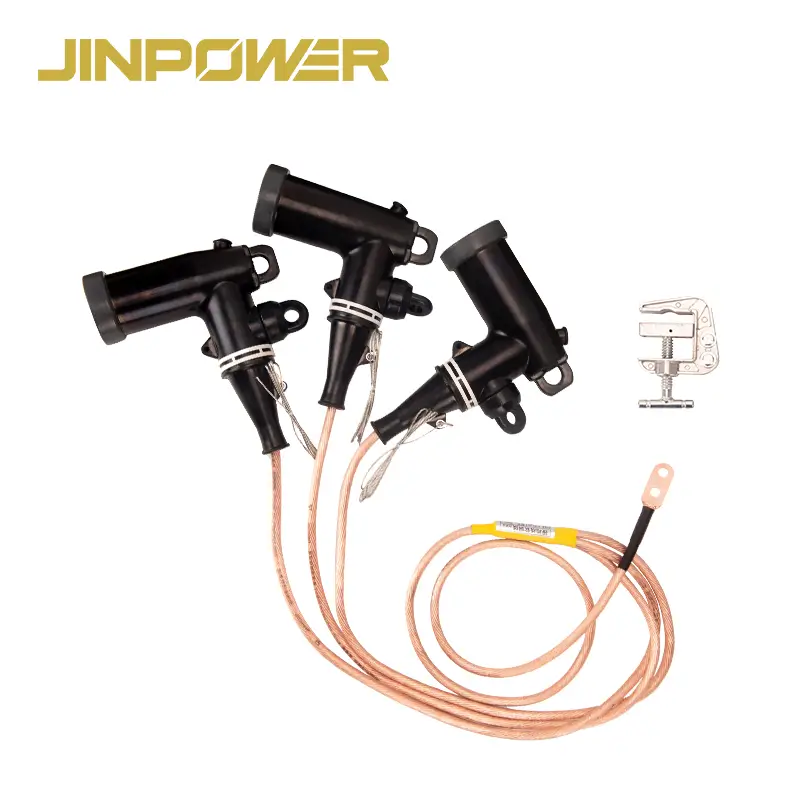
Copper earthing cables are frequently supplied as part of a larger portable earthing system.
The cable, termination, clamp, and connection point must be compatible and suitable for the required electrical and mechanical performance.
Clamps
Different electrical installations require different clamp geometries.
Possible configurations include:
- Busbar clamps
- C-type clamps
- Duckbill clamps
- Round-conductor clamps
- Structure and tower clamps
Buyers should confirm the intended connection surface, jaw opening, material compatibility, clamping mechanism, and rated short-circuit performance.
A clamp should not be selected only because its jaw opening fits the conductor.
Terminations & Connectors
Termination selection depends on the conductor size, clamp design, and approved assembly construction.
Available configuration discussions may include:
- Copper ferrules
- Crimped cable lugs
- Bolted connection interfaces
- Compatible connector systems
- Mechanical strain relief
The final connection method must follow the approved technical design.
Earth-End Connections and Approved Earthing Points
Portable earthing equipment may connect to a designated earth bar, approved structural earthing point, fixed earthing terminal, or another verified connection arrangement.
A driven ground rod is not automatically required for every portable earthing application.
The correct earth-end interface should be determined by the electrical installation design and approved maintenance procedure.
Where a portable grounding electrode is specified, its suitability and connection requirements must be evaluated separately.
Reels & Storage
Storage reels and transport accessories can help organise portable earthing equipment between maintenance activities.
Options may include:
- Open-frame reels
- Enclosed storage reels
- Cable identification labels
- Organised lead sets
- Spare approved connection hardware
- Project-specific transport packaging
Reels must accommodate the cable dimensions and permitted bending requirements.
Cable Assembly Configuration
| Component | Configuration Options | Main Selection Requirement |
|---|---|---|
| Conductor | Braided / Stranded Copper | Cross-section and required performance |
| Copper Finish | Bare / Tinned | Environmental and connection compatibility |
| Sheath | PVC / Elastomer / Other Approved Material | Applicable cable specification |
| Termination | Ferrule / Lug / Approved Connector | Electrical and mechanical integrity |
| Clamp | Busbar / C-Type / Duckbill / Other | Connection geometry and rating |
| Earth-End Interface | Approved Earth Bar / Terminal / Electrode | Site earthing design |
| Storage | Reel / Bag / Case | Cable protection and identification |
| Marking | Length / Model / Batch / Serial ID | Traceability and inspection |
Documentation Pack for Tender & Acceptance
For utility, EPC, and industrial project purchasing, the technical documentation should clearly identify the supplied cable or finished assembly.
Depending on the order and available test scope, the documentation package may include:
- Bill of Materials (BOM)
- Cable specification and construction details
- Conductor cross-section and length
- Ferrule, lug, and clamp drawings
- Assembly configuration drawings
- Available electrical test reports
- Available mechanical inspection records
- Product identification and traceability
- Packing list and project labels
Documents must correspond to the actual supplied configuration.
A cable test report should not be used as a substitute for the required performance evidence of a complete portable earthing set.
EN/IEC Standards, Testing and Traceability
For European projects, EN/IEC 61138 and EN/IEC 61230 serve different purposes in the selection and verification of portable earthing equipment.
IEC 61138: Cable Requirements
IEC 61138 covers specified flexible cables intended for portable earthing and short-circuiting equipment.
Its scope includes cable constructions with insulation based on:
- Ethylene Propylene Rubber (EPR)
- Polyvinyl Chloride (PVC)
- Silicone Rubber (SiR)
The standard addresses applicable cable construction and testing requirements.
These cables are intended for earthing and short-circuiting equipment and are not assigned a conventional rated operating voltage.
Compliance should be verified against the specific cable construction and applicable test documentation.
IEC 61230: Portable Earthing Equipment
IEC 61230 covers portable equipment for temporary earthing or earthing and short-circuiting of isolated or de-energized AC and DC electrical installations.
Its scope includes relevant equipment, devices, and components.
The short-circuit withstand capability of equipment is expressed through specified current, duration, and peak-factor requirements.
For buyers, this means that cable size and cable test results alone are not sufficient to establish the rating of the complete portable earthing assembly.
Short-Circuit Rating and Test Evidence
Before approving a cable assembly or complete earthing set, buyers should review the applicable electrical and mechanical performance evidence.
| Verification Item | What Should Be Checked |
|---|---|
| Cable Cross-Section | Actual conductor size in mm² |
| Rated Short-Circuit Current | Verified value in kA |
| Rated Duration | Corresponding withstand time |
| Peak-Current Capability | Verified peak rating or factor where required |
| Cable Resistance | Test conditions and measured results |
| Termination Integrity | Connection design and relevant inspection evidence |
| Clamp Compatibility | Approved clamp type and rating |
| Finished Assembly | Configuration corresponding to the available test evidence |
| Identification | Model, batch or serial information |
| Documentation | Relevant reports, drawings, and declarations |
JINPOWER can review the required standards and available technical documents for the selected cable or assembly before order confirmation.
Compliance or certification should only be stated when supported by the actual product configuration and applicable documentation.
For a detailed explanation of the equipment standard, see IEC 61230 Explained: What Compliance Means for Portable Earthing & Short-Circuit Kits.
Project-Specific Cable Assemblies and OEM Options
Utilities, EPC contractors, industrial facilities, and electrical safety equipment distributors often require different cable configurations.
JINPOWER supports project-based specification discussions and bulk supply for copper earthing cables and related assemblies.
Available Configuration Options
Conductor Specifications
- Braided or stranded copper
- Bare or tinned copper
- Project-specified cross-section
- Required cable lengths
Electrical Requirements
- Required short-circuit current
- Rated withstand duration
- Applicable technical standard
- Compatible assembly components
Terminations and Connections
- Ferrules and copper lugs
- Clamp-compatible termination systems
- Cable-end identification
- Specified strain-relief construction
Sheaths and Identification
- Material and colour requirements
- Cable length markings
- Equipment identification
- Batch or serial tracking
Project Supply
- Single leads or multi-lead assemblies
- Approved clamp configurations
- Storage reels and packaging
- Multilingual product labels
- Available technical documentation
- OEM packaging and branding
For repeat orders, buyers should confirm that conductor construction, electrical requirements, cable dimensions, termination methods, and approved components remain consistent with the original specification.
Safety Principles (High-Level)
Portable earthing equipment forms part of a controlled electrical safety procedure.
The following general principles do not replace site-specific work instructions or applicable regulations.
- Qualified Personnel: Installation and removal must be performed by trained and authorised personnel.
- Verified Electrical Condition: Equipment must be isolated, de-energized, and verified according to the approved procedure before temporary earthing is applied.
- Rated Components: Cables, clamps, connectors, and the complete arrangement must meet the specified electrical and mechanical requirements.
- Approved Connection Points: Connections must use suitable, designated earthing points and compatible hardware.
- Inspection Before Use: Check cables, sheaths, copper strands, ferrules, lugs, and clamps for damage or deterioration.
- Correct Equipment Identification: Maintain the required ratings, identification labels, and inspection records.
- Controlled Storage: Protect earthing equipment from mechanical damage, contamination, and unsuitable storage conditions.
Damaged, modified, or unverified equipment should not be returned to service until assessed under the applicable inspection and maintenance procedure.
Always follow the site’s approved electrical safety rules and local regulations.
Cost & Lead Time
The cost of a copper earthing cable depends on its conductor size, copper construction, length, sheath material, terminations, and required technical documentation.
For complete assemblies, clamp type, connection accessories, identification requirements, and packaging may also affect the quotation.
Production and delivery schedules depend on the confirmed specification, order quantity, component availability, inspection requirements, and destination.
JINPOWER can review consolidated project orders and provide quotation and delivery information after technical approval.
Frequently Asked Questions
1. What size copper earthing cable do I need?
Cable size should be selected according to the prospective short-circuit current, required withstand duration, applicable standard, conductor construction, and complete assembly design.
Conductor cross-section alone does not establish the rated short-circuit capacity of a finished earthing set.
2. What is the difference between IEC 61138 and IEC 61230?
IEC 61138 covers specified cables used in portable earthing and short-circuiting equipment.
IEC 61230 covers portable earthing and earthing-and-short-circuiting equipment, including relevant components and complete assemblies.
The applicable requirements and test documentation should be confirmed for the product being purchased.
3. What short-circuit current rating is available for your earthing cables?
The applicable rating depends on conductor construction, cross-section, rated duration, terminations, and the verified assembly configuration.
Please provide your required short-circuit current and withstand time so that the suitable product and available test documentation can be reviewed.
4. Can I splice copper grounding wire?
Splicing a portable protective earthing lead can affect its electrical and mechanical performance.
Field splicing should not be carried out unless it is specifically approved under the applicable equipment design, manufacturer instructions, and maintenance procedure.
Where replacement is necessary, a properly manufactured and verified assembly is generally the preferred purchasing approach.
5. Can I use copper earthing cables with aluminum equipment?
Copper earthing cables may be used with suitable connection systems on equipment containing aluminum components, but the connection materials and design must be compatible.
Buyers should confirm galvanic corrosion risks, contact surfaces, clamp construction, and the required electrical performance.
6. Is insulated copper grounding wire safe to touch near energized equipment?
No. A protective sheath on a portable earthing cable must not be treated as touch-safe insulation for work near energized conductors.
Portable earthing cables are intended for use in approved temporary earthing procedures, and workers must follow the applicable electrical safety requirements.
7. When should I choose braided copper instead of stranded copper?
Braided copper may be preferred where flexible routing and handling are important.
Round stranded copper may be suitable for other cable handling and termination requirements.
The correct selection depends on the actual cable design, electrical performance, mechanical properties, and project specification.
8. What information is required for a technical quotation?
Please provide:
- Required conductor cross-section (mm²)
- Short-circuit current (kA)
- Rated duration (s)
- Required cable length
- Braided or stranded conductor preference
- Termination and clamp requirements
- Applicable standard
- Quantity and destination country
- Required testing and documentation
These details allow us to review suitable cable and assembly configurations before quotation.
Contact Us
Request Copper Earthing Cables for Your Project
JINPOWER supplies flexible copper earthing cables and project-specific grounding lead configurations for utilities, electrical contractors, industrial facilities, and distributors.
Whether you need individual copper earthing leads, pre-terminated cables, or components for a portable earthing system, we can help review the technical specification and available options.
For a quotation, send us the required conductor cross-section, short-circuit current, rated duration, cable length, connection type, applicable standard, quantity, and destination country.
Our team can then confirm available configurations, relevant technical data, packaging options, and quotation details.
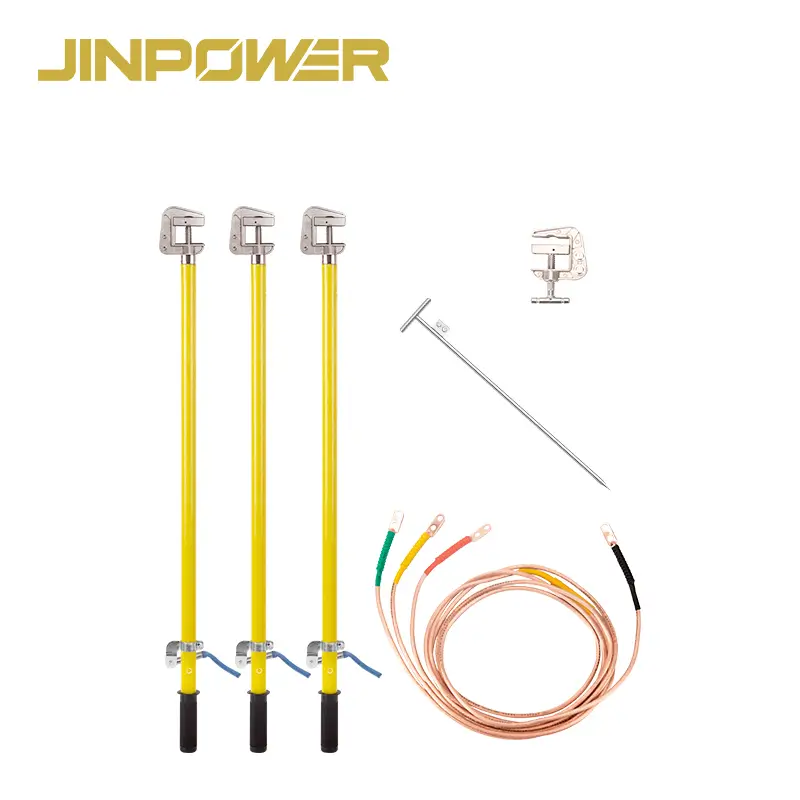
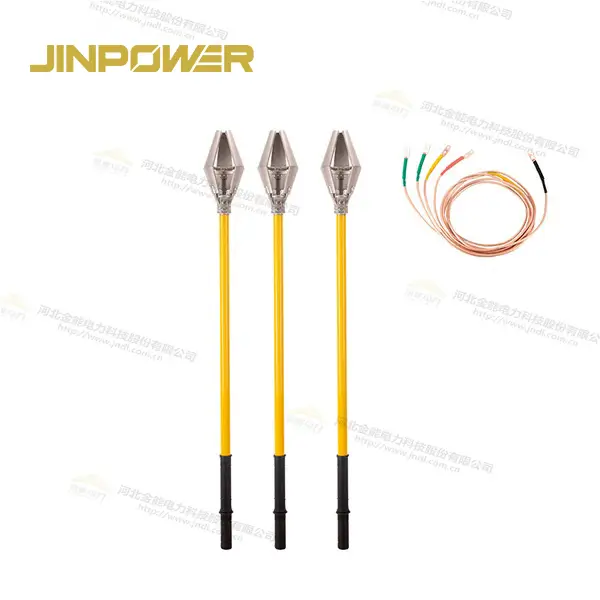
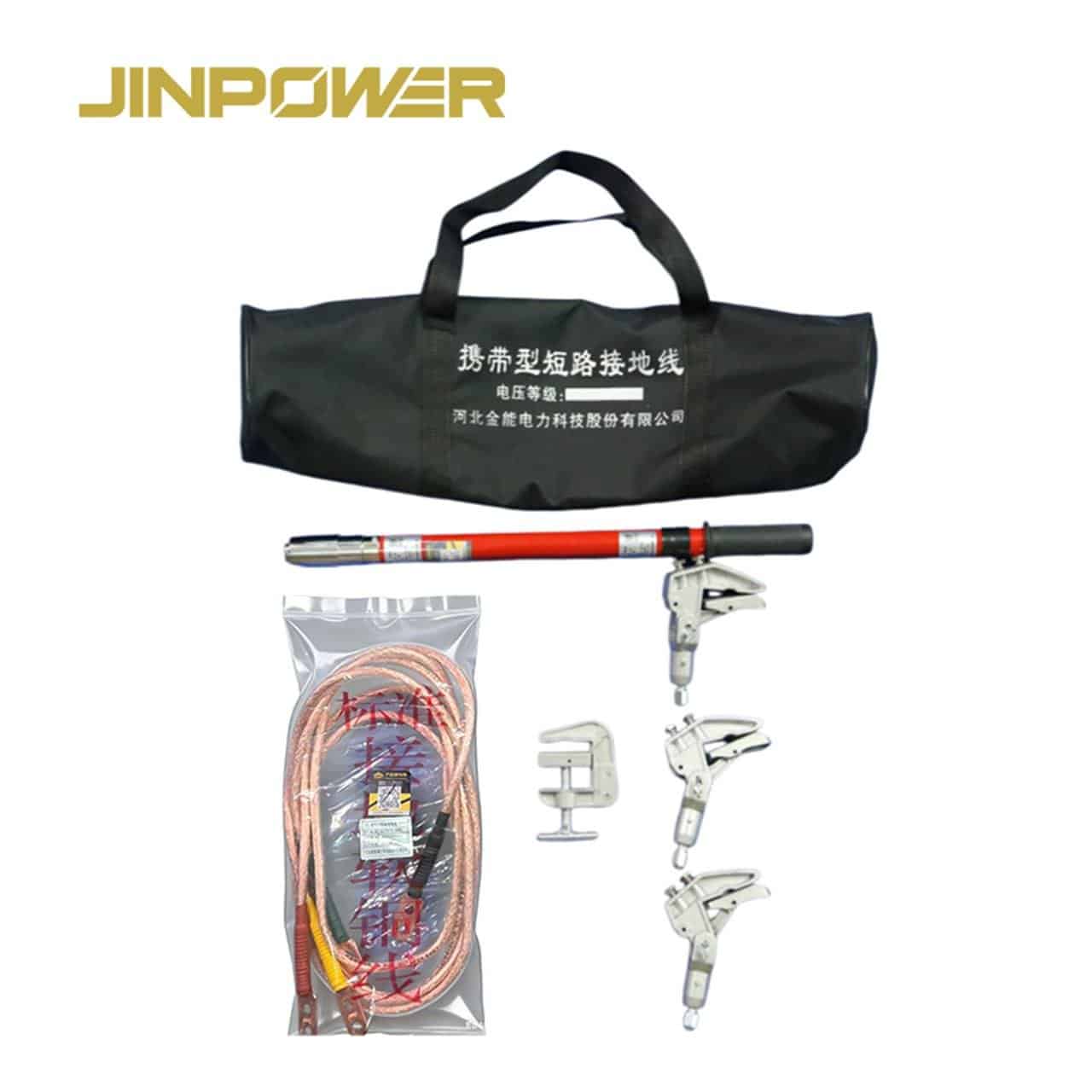
Related JINPOWER Products








 Hrvatski
 Čeština
 Dansk
Dansk Nederlands
 Filipino
 Français
 Deutsch
 Italiano
 日本語
日本語 Қазақ тілі
 ភាសាខ្មែរ
 한국어
한국어 Кыргызча
 ພາສາລາວ
 Монгол
 فارسی
فارسی Polski
 Português
 Română
 Русский
 Slovenščina
 Español
 Kiswahili
 ไทย
ไทย Українська
 Tiếng Việt
 English