
Recommended News
Hot News
Fill in your information
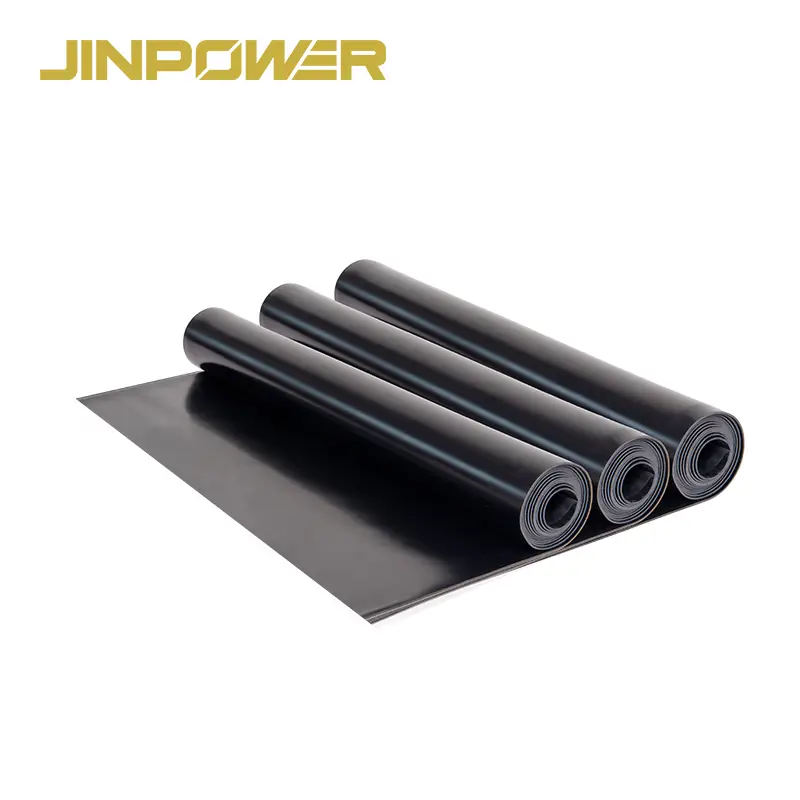
Electrical Insulating Rubber Matting for Switchgear and Substations
JINPOWER supplies electrical insulating rubber mats for switchgear rooms, substations, control panels, power distribution facilities, and industrial electrical maintenance areas.
Our product range includes Class 0 to Class 4 options, different surface patterns, rubber compound configurations, and project-specific roll dimensions. Available designs include corrugated, studded, and diamond plate insulating rubber matting.
Electrical insulating mats provide an insulating surface beneath workers’ feet to help reduce electrical shock exposure when selected and used according to the applicable safety requirements.
The correct mat should be selected according to the actual electrical exposure, required insulation class, AC/DC application, dimensions, and applicable product standard.
For European projects, buyers should confirm the relevant IEC/EN 61111 edition, the product’s verified electrical class, and the available model-specific test documentation before purchasing.
JINPOWER supports utilities, EPC contractors, electrical safety equipment distributors, and industrial buyers with product specifications, technical documentation review, custom dimensions, and bulk supply.
Need the Right Class, Thickness, or Roll Size for Your Project?
Send us your required electrical class, AC/DC application, mat thickness, surface pattern, dimensions, quantity, and destination country.
We can help you review the available product configurations, technical specifications, and documentation requirements before quotation.
Electrical Insulating Corrugated Rubber Matting for Switchboards
Corrugated insulating rubber matting features a ribbed surface profile and is commonly considered for switchboard rooms, electrical panels, and industrial electrical work areas.
The ribbed surface provides a defined traction pattern. Actual slip-resistance performance depends on the tested product and floor conditions.
Available thicknesses, electrical classes, widths, and roll lengths should be confirmed for the selected model.


Electrical Insulating Stud Rubber Matting for Switchboards
Studded rubber insulating mats have a raised circular surface pattern.
This design may be considered for switchboard operating areas, electrical maintenance locations, and industrial facilities where a textured walking surface is required.
Buyers should confirm the electrical class, thickness, dimensions, and mechanical properties of the selected studded mat.


Electrical Insulating Diamond Plate Rubber Matting for Switchboards
Diamond plate insulating rubber matting features a raised diamond-pattern surface.
It can be considered for electrical maintenance areas, switchgear rooms, and industrial operating zones requiring a textured insulating floor covering.
The finished product must meet the required electrical class and relevant test requirements regardless of its surface pattern.


Applications of Electrical Insulating Mats
Electrical insulating mats are used in workplaces where workers may be exposed to electrical hazards during equipment operation, inspection, and maintenance.
They provide supplementary insulating protection beneath the worker’s feet but do not replace equipment isolation, safe working procedures, or other required electrical protective measures.
1. Substations & Switchgear Rooms
Electrical insulating mats are commonly installed in designated operating areas around switchgear, distribution panels, and other electrical equipment.
Typical applications include:
- Switchgear operating positions
- Substation control areas
- Distribution panel access points
- Electrical maintenance locations
- Designated operator standing areas
The required mat class should be determined from the actual electrical exposure and applicable work procedure, not simply from the nominal voltage of the electrical installation.
For projects requiring dedicated switchboard floor protection, explore our Switchboard Mat range.
2. Electrical Panels & Control Rooms
Insulating rubber mats can be placed in designated work areas around electrical panels, control cabinets, and motor control centres.
They help provide an insulating surface beneath personnel during approved electrical operations.
For these environments, buyers should consider:
- Required electrical class
- Available floor space
- Mat width and length
- Surface pattern
- Cleaning and maintenance requirements
- Applicable electrical safety procedures
A properly selected mat is one component of a broader electrical safety system.
3. Workshops & Industrial Workbenches
Industrial maintenance workshops may require insulating mats near electrical equipment, test benches, and power control systems.
Selection should consider the electrical hazard as well as mechanical wear, equipment movement, and expected floor contamination.
Where oils, acids, or other chemicals may be present, the selected mat should also be evaluated for the relevant material resistance.
An electrical insulating mat should not automatically be assumed to provide chemical resistance or certified anti-fatigue performance.
For applications involving frequent chemical exposure, see our Chemical Resistant Mat options.
4. Power Plants & Energy Projects
Electrical insulating matting may be specified for designated operating and maintenance areas in:
- Thermal power plants
- Hydroelectric facilities
- Renewable energy installations
- Transformer and distribution rooms
- Industrial power infrastructure
- Railway electrical facilities
Project requirements may differ according to the installation voltage, operating procedures, environmental exposure, and applicable technical standards.
For AC/DC installations, the selected mat must have the appropriate verified electrical classification.
5. Custom Applications
Some installations require special dimensions, surface patterns, colours, or identification arrangements.
JINPOWER can discuss:
- Pre-cut insulating mats
- Roll-format rubber matting
- Custom widths and lengths
- Corrugated, studded, or diamond surface patterns
- Project-specific colour options
- Warning-line designs
- Custom packaging and product identification
Custom dimensions must remain consistent with the applicable standard, electrical class, and approved product configuration.
Not every width or cut size is suitable for every IEC 61111 class.



Technical Specifications of Electrical Insulating Mats
Technical specifications are central to electrical insulating mat selection.
For European utilities, electrical contractors, and distributors, the most important information includes electrical class, maximum operating voltage, thickness, dimensions, material construction, surface pattern, and supporting test documents.
IEC 61111:2026 is the current international standard for electrical insulating matting. Products tested according to earlier editions should be identified by their actual test standard and documentation.
1. IEC Voltage Classifications
IEC 61111 classifies electrical insulating matting according to maximum operating voltage.
The standard distinguishes matting intended for AC-only use from matting verified for both AC and DC use.
The table below provides the IEC 61111:2026 reference values.
| IEC Class | Maximum AC Operating Voltage | Maximum DC Operating Voltage* | Maximum Thickness |
|---|---|---|---|
| Class 0 | 1,000 V | 1,500 V | 6 mm |
| Class 1 | 7,500 V | 11,250 V | 6 mm |
| Class 2 | 17,000 V | 25,500 V | 8 mm |
| Class 3 | 26,500 V | 39,750 V | 11 mm |
| Class 4 | 36,000 V | 54,000 V | 14 mm |
Important Technical Notes
- These values are standard class references, not confirmation that every JINPOWER model has passed testing under IEC 61111:2026.
- The DC values apply to products verified for the corresponding AC/DC classification.
- Maximum thickness is a standard limit, not a recommended thickness for every application.
- Actual product thickness, electrical performance, and class must be confirmed against the specific model and applicable test documentation.
- Proof-test voltage and withstand-test voltage are not the same as maximum operating voltage.
For projects using IEC 61111:2009, the actual testing and product documentation should reference that edition. For European tenders, confirm the EN or national standard edition specified by the customer.
2. Available Mat Configurations
JINPOWER’s published product range includes different electrical classes, thicknesses, widths, and roll lengths.
The following parameters should be confirmed when selecting a specific model.
| Product Parameter | Available Range / Selection Requirement |
|---|---|
| Product | Electrical Insulating Rubber Mat |
| Electrical Class | Class 0–4 options, subject to model verification |
| AC Operating Voltage | According to verified electrical class |
| DC Operating Voltage | Only for verified AC/DC configurations |
| Thickness | Published product range: 3–14 mm |
| Width | Published range: 0.5–2.0 m; class restrictions apply |
| Roll Length | Listed options include 2 m, 5 m, 10 m and 20 m |
| Material | Model-specific rubber compound |
| Surface Pattern | Corrugated / Studded / Diamond Plate / Other Approved Finish |
| Colours | Black / Grey / Red / Green, subject to availability |
| Warning Markings | Optional project-specific warning-line designs |
| Applicable Standard | Confirm IEC/EN edition by model |
| Test Documentation | Confirm available reports and test scope |
| Customization | Subject to electrical class and design approval |
Size and Class Restrictions
Under IEC 61111:2026, Class 0–2 matting has a minimum length and width requirement of 600 mm, while Class 3–4 matting has a minimum length and width requirement of 914 mm.
The standard also distinguishes portable insulating matting from stationary roll-format matting.
Therefore, a 0.5 m-wide product should not automatically be represented as conforming to IEC 61111:2026 for every electrical class.
Product dimensions and electrical classification must be verified together before approval.
3. Surface Finishes
JINPOWER offers different surface profiles for industrial electrical work areas.
Smooth Surface
Smooth insulating matting may be considered for specified clean indoor applications where the finished surface satisfies the applicable product requirements.
Corrugated / Fine Ribbed Surface
Ribbed insulating matting features raised linear patterns and is commonly used in switchboard rooms and electrical operating areas.
Studded Surface
Studded matting has a raised circular pattern that may be selected according to floor layout and handling requirements.
Diamond Plate Surface
Diamond-pattern matting provides a textured surface for industrial electrical areas.
Actual slip resistance, abrasion resistance, and cleaning suitability should be confirmed for the selected model and operating conditions.
Surface pattern alone does not determine electrical protection.
4. Size Options
The existing JINPOWER product range includes:
- Widths: 0.5–2.0 m, subject to model and class requirements.
- Roll Lengths: 2 m, 5 m, 10 m, and 20 m, subject to availability.
- Thicknesses: 3–14 mm, depending on product configuration.
- Surface Patterns: Corrugated, studded, diamond plate, and other available finishes.
- Colours: Black, grey, red, and green, depending on model.
For project purchasing, buyers should specify the required finished dimensions and applicable electrical class.
Cutting or modifying insulating matting should follow the manufacturer’s approved instructions and the dimensional, marking, and testing requirements of the applicable standard.
For guidance on choosing the supply format, see Rolls vs. Pre-Cut Insulating Mats: Which Supply Option Is Best for Your Project?.
Material & Physical Characteristics of Electrical Insulating Mats
The material composition of an insulating mat affects flexibility, mechanical properties, environmental resistance, and electrical performance.
JINPOWER’s published product range includes rubber compound configurations based on materials such as Natural Rubber (NR), EPDM, and SBR, with other polymer options requiring model-specific confirmation.
The actual compound should be identified in the technical specification for the selected product.
1. Material Composition
Natural Rubber (NR)
Natural rubber can provide elasticity and flexibility in suitable insulating mat constructions.
The rubber content and formulation should be verified by product model rather than assumed to be identical across the entire range.
EPDM
EPDM-based formulations may be considered where ozone resistance, weathering characteristics, or specific environmental performance are required.
The finished product must still meet its electrical and mechanical requirements.
SBR
SBR may be used in rubber compounds to achieve specified processing and mechanical characteristics.
Performance depends on the complete formulation rather than one ingredient.
Other Polymer Configurations
Alternative polymer formulations should be evaluated separately for their suitability under the applicable product standard.
Claims relating to recycled content, chemical composition, emissions, or environmental properties should be supported by relevant material documentation.
2. Available Colors & Surface Designs
Available colour options may include:
- Black
- Grey
- Red
- Green
- Project-specific colours
- Optional yellow warning-line designs
Surface options include:
- Corrugated
- Fine ribbed
- Studded
- Diamond plate
- Other model-specific finishes
The chosen colour or surface profile must not be used as a substitute for electrical class markings.
Electrical performance should be confirmed independently of the product’s appearance.
3. Model-Specific Physical Properties
In addition to electrical insulation, buyers should review the mechanical properties of the selected mat.
Important parameters include:
| Physical Property | Technical Information to Verify |
|---|---|
| Hardness | Shore A value and test method |
| Tensile Strength | Measured value in MPa |
| Elongation at Break | Measured value and test method |
| Compression Set | Test temperature, duration and result |
| Thickness Tolerance | Product dimensions and applicable specification |
| Abrasion Resistance | Relevant model-specific test results |
| Temperature Suitability | Approved operating temperature and category |
| Surface Characteristics | Slip-resistance and finish requirements |
The existing JINPOWER specifications list representative physical parameters, including hardness of 60 ± 5 Shore A, tensile strength of at least 5.0 MPa, elongation at break of at least 250%, and compression set of no more than 40% under specified test conditions.
These published figures should be confirmed against the selected model’s current technical datasheet and test methods before technical approval.
For IEC 61111:2026 applications, the standard operating temperature range and any special low-temperature classification should be evaluated separately from raw-material temperature claims.
Chemical Resistance & Durability of Insulating Mats
Electrical insulating matting may be exposed to dust, moisture, oils, cleaning agents, foot traffic, and other industrial conditions.
The suitability of a particular rubber compound depends on its tested material properties and the actual operating environment.
Chemical resistance, weather resistance, heat resistance, and service life should not be assumed to be identical for every mat in the product range.
1. Oil and Chemical Resistance
Industrial electrical rooms may contain oils, greases, cleaning chemicals, and other contaminants.
Where chemical exposure is expected, buyers should specify the relevant chemicals and operating conditions.
The selected mat should be evaluated for material compatibility and any required special properties under the applicable standard.
For industrial applications with frequent chemical exposure, see our Chemical Resistant Mat options.
2. Aging & Weather Resistance
Rubber materials may change over time when exposed to heat, ozone, sunlight, moisture, or repeated mechanical stress.
Suitable formulations can be selected according to the expected conditions, but environmental performance must be confirmed for the specific product.
Regular inspection and appropriate storage help identify deterioration before it affects continued suitability.
3. Wear Resistance & Service Life
The service life of electrical insulating matting depends on:
- Rubber compound and manufacturing quality
- Installation conditions
- Foot traffic and mechanical wear
- Surface contamination
- Cleaning methods
- Storage conditions
- Inspection history
- Electrical and physical condition
There is no single service-life figure that should be applied to every electrical insulating mat regardless of use.
A mat should be removed from service when inspection or testing indicates damage or unacceptable deterioration.
4. Heat Resistance
Electrical insulating mats may be required in industrial areas where ambient temperatures or nearby equipment heat affect the floor environment.
The applicable operating temperature should be confirmed against the relevant standard and actual product design.
For IEC 61111:2026, standard matting is intended for ambient temperatures from -25°C to +55°C, while the special category C addresses more severe low-temperature conditions.
Material temperature-test values should not be treated as the approved operating range of the finished electrical insulating mat without supporting evidence.
For specialised thermal applications, see our Heat Resistant Mat range.
Key Features & Benefits of JINPOWER Electrical Insulating Mats
JINPOWER insulating mats are supplied in different electrical classes, dimensions, and surface configurations for industrial electrical applications.
For professional buyers, the main value lies in selecting a suitable specification and confirming the product’s electrical and physical performance before purchase.
1. Electrical Insulation Class Options
- Class 0–4 product options for different electrical requirements.
- AC and, where verified, AC/DC configurations.
- Model-specific thickness and dimensions.
- Applicable electrical testing and documentation to be confirmed.
The selected mat must be suitable for the actual electrical exposure and approved work procedure.
2. Surface and Handling Options
- Corrugated and fine-ribbed surfaces
- Studded rubber matting
- Diamond plate surfaces
- Roll and pre-cut formats
- Different colours and warning-line options
The required surface should be selected according to installation and maintenance conditions.
3. Material Quality and Durability
Available rubber compounds can be evaluated according to electrical performance, flexibility, mechanical properties, and environmental requirements.
Service life depends on the actual operating conditions and maintenance programme.
4. Material Information and Test Documentation
For professional purchasing, JINPOWER can review relevant requirements for:
- Product specifications
- Electrical test documentation
- Material information
- Available independent test reports
- Batch identification
- Dimensions and inspection records
The technical documents provided should correspond to the actual product and tests performed.
5. Customization Options
JINPOWER supports discussions on:
- Electrical class
- Thickness
- Width and roll length
- Surface design
- Colour selection
- Warning-line markings
- Product identification
- Custom packaging
- OEM and distributor requirements
Custom specifications should be technically approved before production and order confirmation.
IEC/EN 61111, Testing and Product Documentation
IEC 61111 is the principal international standard reference for electrical insulating matting used to protect workers on electrical installations.
IEC 61111:2026, published in September 2026, is the current IEC edition.
IEC 61111:2009 is the previous edition and may still appear in historical product reports or project documentation.
For European projects, buyers should confirm which EN, BS EN, or nationally adopted edition is specified in the purchasing documents.
A product tested to an earlier edition should not automatically be described as compliant with IEC 61111:2026 without the appropriate technical assessment and supporting evidence.
1. International Standards Compliance
The applicable standard should be established before order approval.
IEC 61111
Defines requirements and tests for electrical insulating matting, including electrical classification, dimensions, physical characteristics, electrical testing, and identification.
EN / National Adoption
European utilities and industrial customers may reference an EN standard or a national adoption.
The exact edition should be verified against the destination market and project specification.
ASTM D178
ASTM D178 may be required for projects using the American standard system.
ASTM D178 and IEC 61111 should not automatically be treated as identical or interchangeable certifications.
For each project, confirm:
- Applicable standard and edition
- Required electrical class
- AC-only or AC/DC application
- Dimensions and thickness
- Product marking
- Test documentation
- Any additional customer-specific requirements
2. Proof Testing & Dielectric Strength
Electrical testing verifies important aspects of the insulating performance of a mat.
Depending on the applicable standard and product design, testing may include:
- Electrical proof testing
- Dielectric withstand testing
- Visual and dimensional inspection
- Physical and mechanical testing
- Relevant special-property testing
- Routine or batch inspections where required
Maximum operating voltage is not the same as proof-test voltage or dielectric withstand voltage.
Buyers should confirm the test method, applied test voltage, acceptance criteria, and product identification for the selected class.
Type-test reports, production inspection records, and batch-specific test documentation should be distinguished from one another.
3. Independent Testing and Certification
Independent laboratory reports can provide supporting evidence of specific product properties.
Depending on the product and available documentation, reports may cover:
- Electrical insulating performance
- Physical and mechanical properties
- Material composition
- Chemical or environmental characteristics
- Other project-specific requirements
Where an independent laboratory report is provided, buyers should check:
- Testing organisation
- Report number
- Product model
- Sample identification
- Standard and edition
- Tests performed
- Reported results
A material test report alone should not be presented as evidence that a complete electrical insulating mat meets IEC 61111.
Similarly, a laboratory name does not establish conformity unless the relevant testing and conclusions are documented.
4. Documentation & Traceability
Utilities, EPC contractors, and industrial buyers often require technical documentation before approving electrical safety equipment.
Depending on the project and available product records, a documentation package may include:
| Document | Main Purpose |
|---|---|
| Technical Datasheet | Product model, material, class and dimensions |
| Electrical Test Report | Evidence of tested electrical performance |
| Physical Test Data | Material and mechanical characteristics |
| Product Identification | Model, class and applicable marking |
| Batch Records | Production or inspection traceability |
| Dimensional Information | Width, length, thickness and tolerances |
| Instructions for Use | Installation, inspection and maintenance |
| Applicable Conformity Documents | Evidence for the specified standard and model |
For repeat orders, buyers should ensure that the electrical class, compound specification, dimensions, identification and test requirements remain consistent with the approved product.
Where required, JINPOWER can discuss product marking, batch identification and documentation formats for project supply.
Frequently Asked Questions (FAQ) about Electrical Insulating Mats
1. Which Class of Insulating Mat Should I Choose for My Application?
The required class depends on the actual electrical exposure, approved work procedure, and applicable technical standard.
Under IEC 61111, the maximum AC operating voltages for Class 0–4 are:
- Class 0: 1,000 V AC
- Class 1: 7,500 V AC
- Class 2: 17,000 V AC
- Class 3: 26,500 V AC
- Class 4: 36,000 V AC
The class should not be selected solely by matching the nominal system voltage to a table.
For DC applications, confirm that the selected product is specifically verified for the applicable AC/DC classification.
2. What Standards Do JINPOWER Insulating Mats Comply With?
IEC 61111 is the main international reference for electrical insulating matting.
IEC 61111:2026 is the current IEC edition, while some existing product documentation may reference IEC 61111:2009.
The applicable conformity evidence depends on the specific product model and tests performed.
If your project requires IEC 61111, an EN or national adoption, or ASTM D178, please specify the standard and edition before ordering so the corresponding product documentation can be reviewed.
3. What Is the Lifespan of an Electrical Insulating Mat?
Service life depends on material composition, operating conditions, mechanical wear, cleaning, storage, and inspection.
A fixed replacement interval should not be assumed for every insulating mat.
Mats should be inspected according to the applicable maintenance procedure and removed from service if their condition or verified electrical performance is no longer acceptable.
4. Can Insulating Mats Be Cut or Customized?
Yes. JINPOWER can discuss custom widths, lengths, surface patterns, colours and product identification.
However, the finished dimensions must remain suitable for the electrical class, product design and applicable standard.
Under IEC 61111:2026, the minimum dimensions differ between Class 0–2 and Class 3–4 matting. Therefore, not every custom-cut width can be represented as standard-compliant for every class.
5. Are the Mats Resistant to Oil, Chemicals, and High Temperature?
Resistance depends on the selected rubber formulation and applicable testing.
Buyers should specify the expected oil, chemical, temperature, or environmental exposure so that the relevant material and product documentation can be reviewed.
Electrical insulation performance does not automatically establish chemical or high-temperature resistance.
6. Do You Provide Test Reports and Certifications With the Mats?
JINPOWER can review technical documentation requirements for the selected product and project.
Available documents may include electrical test records, technical datasheets, material information, relevant independent laboratory reports, and product identification records.
The exact documentation should be confirmed for the specific model, test standard and order requirements.
7. Can Electrical Insulating Mats Be Used for DC Installations?
Only when the selected mat has been verified for the applicable DC electrical requirements.
IEC 61111:2026 distinguishes AC-only matting from AC/DC-rated matting.
A product’s AC electrical class alone should not be treated as proof that it is suitable for DC use.
8. What Is the Difference Between Electrical Insulating Mats and ESD Mats?
Electrical insulating mats are designed to provide insulating protection against electrical shock under the applicable electrical class and work conditions.
ESD mats are intended for electrostatic charge control in electronics work areas.
The two product categories have different purposes and technical requirements.
They should not be substituted for one another without verified suitability for the intended application.
For more detail, read Electrical Insulation Mats vs ESD Mats: Key Differences and Selection Guide.
Why Choose JINPOWER Electrical Insulating Mats
Choosing electrical insulating matting involves more than comparing price and thickness.
For industrial buyers, the supplier should be able to communicate clearly about electrical class, material, dimensions, applicable testing and repeat-order requirements.
JINPOWER supports electrical safety product enquiries from utilities, EPC contractors, distributors, and industrial maintenance buyers.
1. Electrical Safety Product Experience
JINPOWER supplies insulating mats and related electrical safety products for industrial and power-sector applications.
We work with buyers who need different product configurations for switchgear rooms, substations, control areas, and maintenance projects.
Our product range enables customers to discuss electrical class, surface finish, and order requirements with a single supply team.
2. Material and Specification Options
We offer rubber insulating matting in different surface and dimensional configurations.
Technical purchasing discussions can cover:
- Electrical class
- Rubber compound
- Thickness
- Product dimensions
- Surface finish
- Mechanical properties
- Environmental requirements
Material composition and performance should be verified for the selected model.
3. Testing and Technical Documentation
For project purchasing, we can review requirements for electrical testing, physical test data, inspection records, and relevant independent laboratory documentation.
Buyers should confirm that the available reports correspond to the approved product model and standard.
4. Product Durability and Maintenance
Rubber compound selection, handling, installation, and maintenance influence the long-term condition of insulating matting.
We recommend specifying inspection and storage requirements alongside electrical performance, especially for repeat orders or large industrial installations.
5. Flexible Customization
JINPOWER supports project-specific discussions on:
- Width and length
- Thickness
- Corrugated, studded or diamond surfaces
- Colour and warning-line options
- Product identification
- Export packaging
- OEM and private-label requirements
Any customization affecting electrical performance or standard conformity must be reviewed before approval.
6. Global Supply and Project Support
For international electrical safety equipment purchasing, we can support specification discussions, consolidated product enquiries, packaging requirements, and technical communication.
Utilities, contractors, and distributors can submit an approved specification or technical schedule for review before quotation.
Request the Right Insulating Mat for Your Project
If you are sourcing electrical insulating mats for switchgear rooms, substations, control panels, power plants or industrial maintenance areas, JINPOWER can help you review the available product configurations against your requirements.
For a technical quotation, please provide:
- Electrical Class: Class 0, 1, 2, 3 or 4.
- Application: Switchgear room, substation, control room or other installation.
- Electrical Requirements: AC or AC/DC application and actual exposure.
- Standard: Required IEC/EN edition or other project specification.
- Thickness: Required finished thickness in mm.
- Dimensions: Width, roll length or pre-cut size.
- Surface Pattern: Corrugated, studded, diamond plate or other available finish.
- Material Requirements: Any specified rubber compound or special properties.
- Quantity: Number of rolls, pieces or total area.
- Destination Country: For export and documentation requirements.
- Technical Documents: Required datasheets, test reports or project acceptance records.
We can then review available models, specifications, relevant documentation, packaging options and quotation details.
For bulk purchasing and repeat orders, project-specific marking and product identification can also be discussed.



 Hrvatski
 Čeština
 Dansk
 Nederlands
 Filipino
 Français
 Deutsch
 Italiano
 日本語
 Қазақ тілі
 ភាសាខ្មែរ
 한국어
 Кыргызча
 ພາສາລາວ
 Монгол
 فارسی
 Polski
 Português
 Română
 Русский
 Slovenščina
 Español
 Kiswahili
 ไทย
 Українська
 Tiếng Việt
 English