
Recommended News
Hot News
Fill in your information
Portable Earthing and Grounding Systems for Temporary Electrical Safety
When electrical work is carried out on isolated conductors, switchgear, substations, or overhead lines, a fixed grounding system alone does not protect the crew at the exact work location. What protects the crew is a correctly selected portable earthing and grounding system that creates a controlled temporary path to earth before maintenance, switching, inspection, or repair begins.
JINPOWER portable earthing systems are designed for temporary grounding and earthing-and-short-circuiting applications in utility, industrial, and infrastructure environments. This product range covers portable earthing kits, grounding cables, grounding rods, grounding sticks, and grounding clamps for customers who need practical field configurations rather than general descriptions. Whether you are buying for substation maintenance, overhead line work, switchgear service, or industrial shutdown procedures, the goal is the same: build a reliable temporary grounding path that matches the real work condition.
Need the right portable earthing system for your project?
Send your voltage level, application type, and configuration request. JINPOWER can recommend the right grounding cable, rod, stick, and clamp combination and provide the corresponding technical documents for review.





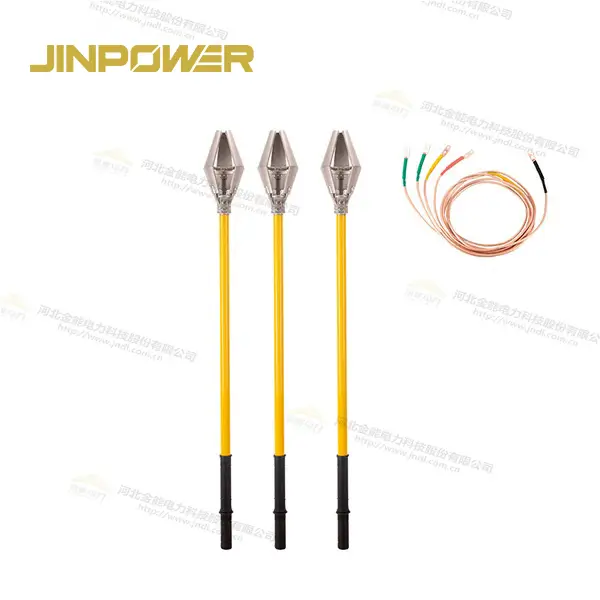

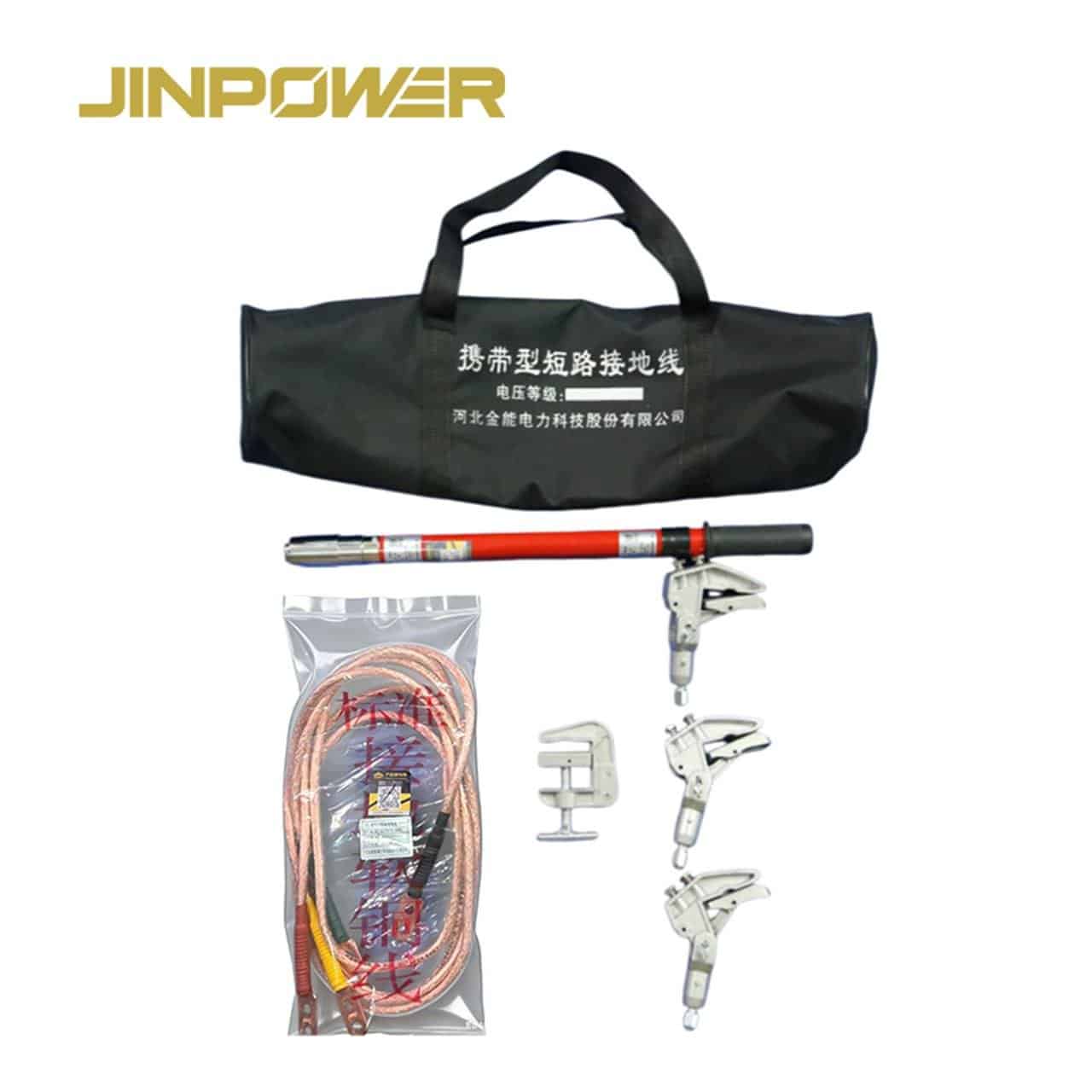
What a Portable Earthing System Includes
A complete portable earthing system is not one single part. It is a configured set of components selected to work together safely and efficiently in the field.
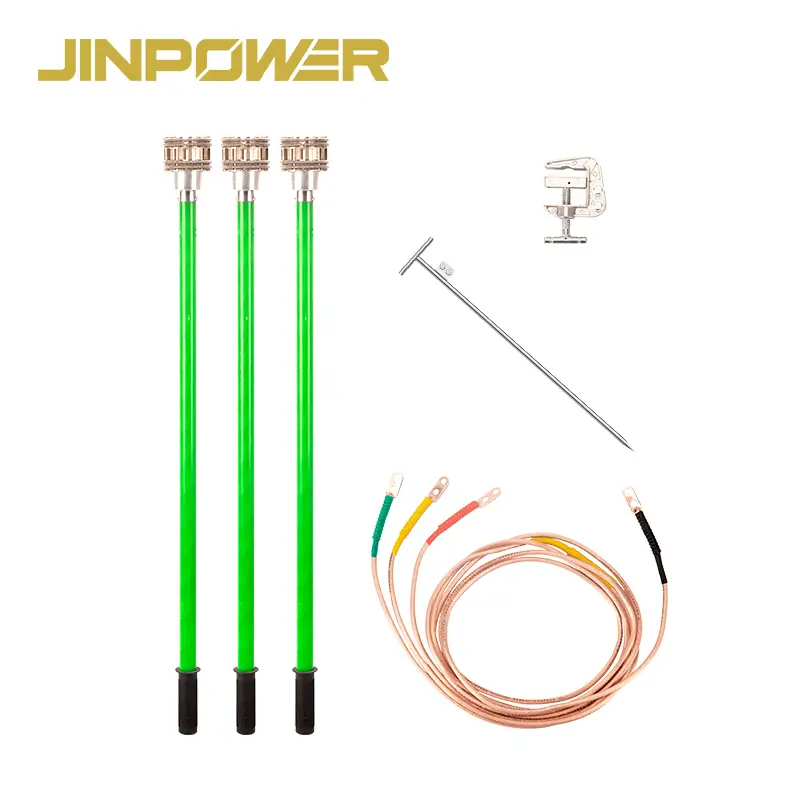
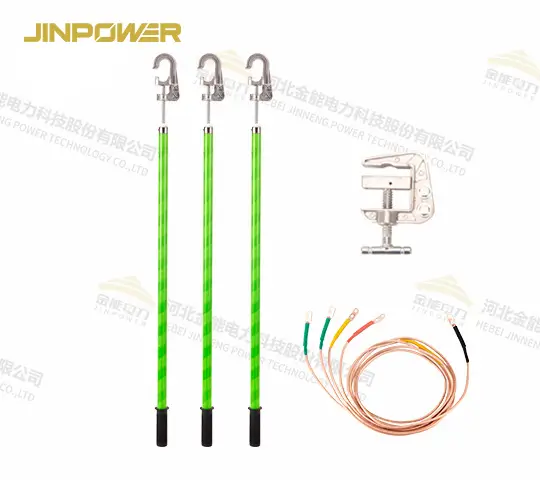
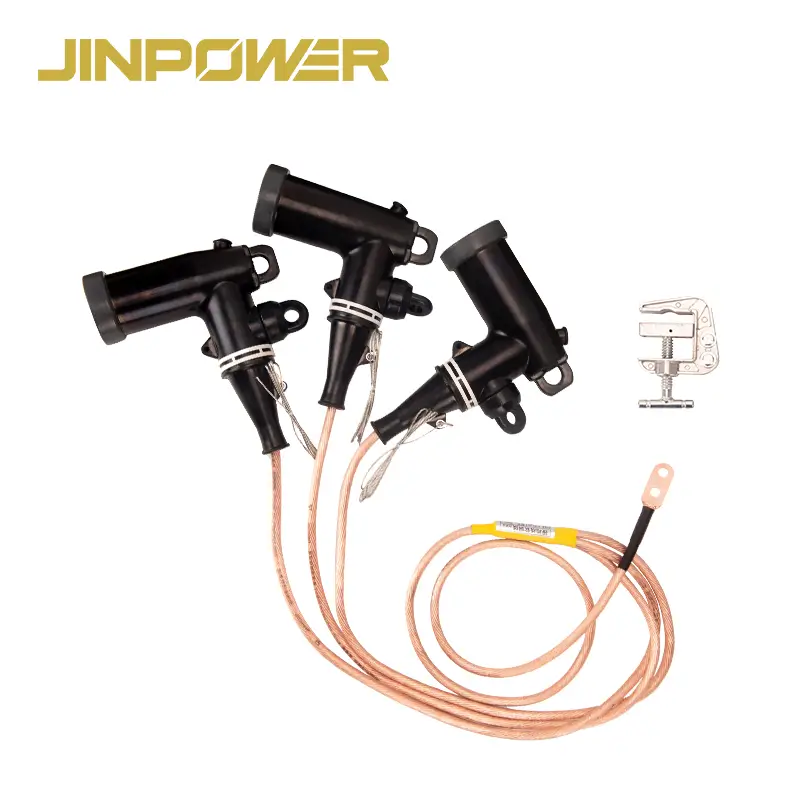
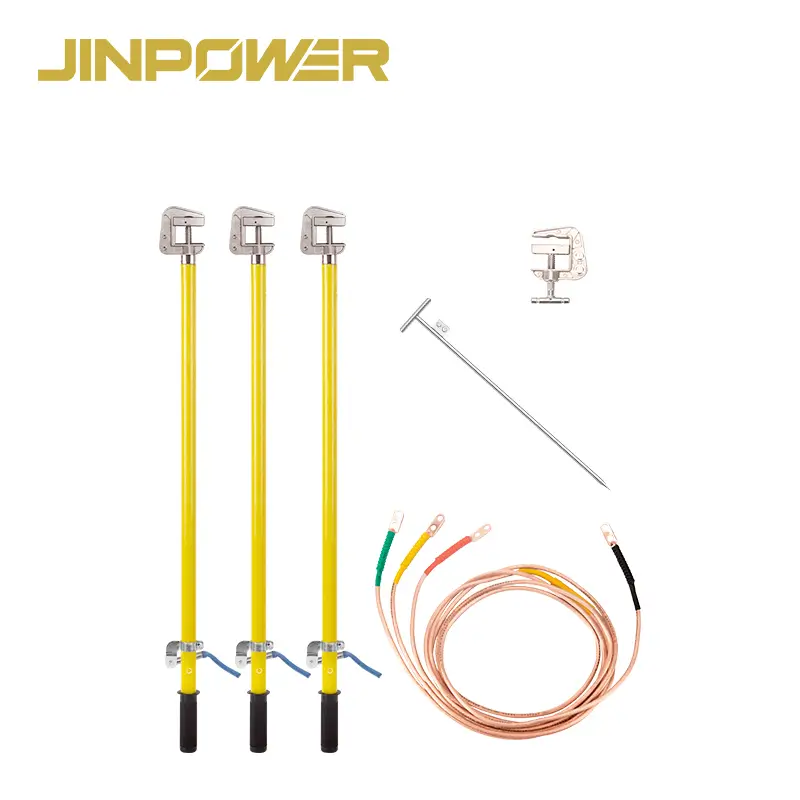
The core configuration usually includes:
- Grounding cables to carry the temporary earthing connection
- Grounding clamps to connect to conductors, busbars, earth bars, or grounding points
- Grounding rods or earth rods to establish or extend the earthing path where required
- Grounding sticks for safer-distance application
- Portable bags or carrying sets for transport, storage, and field readiness
For many buyers, the most important point is not simply buying separate parts. It is choosing a configuration that matches the voltage class, connection geometry, working distance, and site procedure.
Why Temporary Grounding Equipment Matters
A permanent grounding installation belongs to the infrastructure. A portable grounding system belongs to the task. It is used at the work location to create a temporary protective condition after isolation and before contact with the conductor or equipment begins.
This difference matters in procurement. A permanent grounding system is designed once and installed as part of the facility. Temporary grounding equipment must be selected according to the actual operating environment, the location of the work, the accessible connection points, and the safety procedure used by the crew.
That is why buyers in the power industry do not usually purchase a generic “grounding system.” They purchase a portable earthing solution built around the job: the right cable cross-section, the right clamp type, the right stick length, and the right configuration logic for the site.
Core Product Categories
Portable Earthing and Short-Circuit Kits
These kits are used to create a controlled temporary earth path and, where required, a short-circuit path during maintenance, isolation, and fault-response work. They are commonly used in substations, distribution systems, switchgear, and overhead line operations where a complete configured set is more practical than loose individual parts.
Grounding Cables
Grounding cables are the conductive core of the temporary system. They are selected according to voltage class, fault current requirement, connection distance, and the physical layout of the job. The correct cable size is one of the most important parts of temporary earthing selection because it affects both performance and suitability.
Grounding Rods and Grounding Sticks
Grounding rods and grounding sticks help connect the system from a safer distance and make field application more practical in high-access, limited-clearance, or elevated work areas. In many installations, they are essential for controlled connection and safer handling.
Grounding Clamps
Grounding clamps form the actual connection to the conductor, busbar, earth bar, or grounding point. Clamp design should be selected according to conductor profile, access direction, and the structure of the installation. Choosing the wrong clamp style can turn an otherwise correct grounding kit into an unsuitable one.
How to Choose the Right Portable Earthing System
Choose by Voltage Class
Start with the actual system voltage and the work procedure. The temporary grounding set must match the voltage environment and the isolation method used on site.
Choose by Connection Point
Different applications require different connection geometry. Some tasks connect to busbars, some to conductors, some to earth bars, and some to dedicated earthing positions. Clamp shape and stick type should match the real hardware, not a generic description.
Choose by Cable Cross-Section
The correct grounding cable size depends on the work configuration and expected duty. Common cross-section options include 16 mm², 25 mm², 35 mm², and 50 mm². Buyers should select cable size according to the actual technical requirement instead of assuming one cable size is suitable for every installation.
Choose by Distance and Access
A compact switchgear room does not require the same setup as an outdoor line or substation yard. Cable length, rod length, and stick length should be selected according to the actual work distance and the way the crew accesses the grounding point.
Choose by Application Type
A substation maintenance kit, an overhead line grounding set, and a switchgear cabinet grounding arrangement may all fall under temporary earthing, but they are not the same configuration. Correct selection begins with the actual task, not with the product name alone.
Technical Configuration Overview
Below are typical configuration ranges used in portable grounding and earthing systems.
| Item | Typical Options |
|---|---|
| System Type | Portable earthing and short-circuiting equipment |
| Voltage Range | 1 kV to 500 kV |
| Cable Cross-Section | 16 / 25 / 35 / 50 mm² |
| Cable Jacket | PVC or rubber insulated jacket |
| Clamp Types | Duck-mouth clamp, flat clamp, line clamp, and project-specific options |
| Grounding Rod / Stick Length | 1.5 m to 6 m |
| Earth Rod Material | Copper-plated steel or solid copper |
| Carrying Method | Portable carrying bag or configured transport set |
| Documentation | Technical sheet, Certificate of Conformity, compliance declaration, and related order documents |
These options provide a practical starting point, but the final configuration should always be matched to the real worksite rather than selected as a one-size-fits-all kit.
Application Scenarios
Substation Maintenance
In substations, crews often need a visible and reliable temporary grounding arrangement before maintenance or inspection begins. Portable earthing kits are used to establish a controlled protective condition in the working zone.
Overhead Line Work
For overhead conductors and line sections under maintenance, grounding cables, grounding sticks, and clamps are used to create a temporary earth path at the work point. This is one of the most common uses of temporary grounding equipment.
Switchgear and Distribution Cabinets
In indoor switchgear and cabinet environments, space is limited and connection accuracy matters. Compact portable grounding systems are often preferred because they provide controlled temporary earthing in confined electrical spaces.
Industrial Electrical Maintenance
In industrial plants, temporary grounding may be required during shutdown, equipment isolation, and electrical servicing. A correctly selected earthing and short-circuiting kit can help support safe work preparation before the crew begins service.
Emergency and Fault Response
When a site requires fast field deployment, ready-to-use portable earthing systems help reduce setup time and improve response efficiency. This is especially valuable in emergency or outage-related work where grounding must be established quickly and correctly.
Standards and Documentation Support
Portable earthing equipment is not only a hardware purchase. It is also a technical review and document review purchase. Buyers often need more than product photos and a part list. They need a configuration discussion that fits their work method and document support that fits their project approval process.
JINPOWER supports product discussion aligned with temporary earthing and earthing-and-short-circuiting applications, including configurations discussed against IEC 61230-oriented procurement requirements where applicable. Document support may include:
- Technical sheet
- Certificate of Conformity
- Compliance declaration
- Configuration confirmation before order
- Related factory document package according to order scope
For many tenders, audits, and project reviews, document readiness matters as much as the product itself.
Why Buyers Work with JINPOWER
Buyers do not only need parts. They need a supplier who can help turn field requirements into a workable kit. JINPOWER supports that process by helping customers move from a general request to a more suitable configuration.
What customers typically value includes:
- Clearer product-range selection
- Support for temporary grounding applications
- Cable, clamp, rod, and stick matching
- Document support for project review
- OEM and configuration-based supply discussion
- Bulk-order communication for utility and industrial projects
For distributors and project buyers, this makes procurement easier to standardize across multiple sites and teams.
OEM and Project Configuration Support
Different markets and projects require different grounding arrangements. One depot may need compact switchgear kits. Another may need longer rods and larger cable sections for yard work or overhead applications. That is why OEM support and project-based configuration matter in this product category.
Available support may include:
- Clamp type selection
- Cable length adjustment
- Rod or stick length selection
- Configuration matching by voltage and application
- Bag or transport-set coordination
- Labeling and packaging support
- Bulk-order planning
This is especially useful for project buyers, utilities, contractors, and distributors who need repeatable configurations rather than one-off purchasing every time.
Frequently Asked Questions
What is the difference between a grounding system and a portable earthing kit?
A permanent grounding system is part of the fixed installation. A portable earthing kit is used temporarily at the work location to create a controlled grounding condition before maintenance, switching, or repair begins.
When should temporary grounding equipment be used?
It is typically used during maintenance, shutdown, isolation, inspection, switching, and fault-response work where a temporary earth path is required for crew protection.
How do I choose the right cable cross-section?
The correct grounding cable cross-section depends on the actual duty, connection path, and worksite configuration. Buyers should confirm the required cable size based on the real application rather than choosing by habit alone.
Can clamp type and cable length be customized?
Yes. Clamp type, cable length, rod length, and other configuration details can be adjusted according to the connection point and work procedure.
Can technical documents be provided for project review?
Yes. Technical sheets, Certificate of Conformity, and related document packages can be supplied according to the order scope and project needs.
Can these systems be configured for substations, overhead lines, and switchgear cabinets?
Yes. Different configurations can be discussed for substations, overhead lines, switchgear, and other electrical work environments according to installation type and operating procedure.
Request the Right Portable Earthing System
If you are sourcing portable earthing systems, grounding cables, grounding rods, grounding sticks, or grounding clamps for substation maintenance, overhead line work, switchgear service, or industrial electrical operations, contact JINPOWER with your voltage class, application type, and configuration request.
Technical communication, document support, OEM discussion, and bulk quotation are available for project and distribution needs.


 Hrvatski
 Čeština
 Dansk
Dansk Nederlands
 Filipino
 Français
 Deutsch
 Italiano
 日本語
日本語 Қазақ тілі
 ភាសាខ្មែរ
 한국어
한국어 Кыргызча
 ພາສາລາວ
 Монгол
 فارسی
فارسی Polski
 Português
 Română
 Русский
 Slovenščina
 Español
 Kiswahili
 ไทย
ไทย Українська
 Tiếng Việt
 English