
Recommended News
Hot News
Fill in your information
Anti-Static & ESD Floor Mats from a Trusted Chinese Manufacturer
Protect your sensitive electronics, servers, and automated systems from static discharge with JINPOWER’s high-performance anti-static and ESD floor mats. Engineered for ESD control, electrical insulation, and anti-fatigue support, our mats are trusted in computer labs, server rooms, power automation sites, and cleanrooms. Available in rolls, tiles, or workstation cuts, each mat offers precise surface resistance, durable materials, and seamless integration with grounding systems—ideal for static-safe flooring in mission-critical environments.
Quick Selection
Use area: server room / electronics line / cleanroom / power control room
Format: ESD mat roll / tiles / workstation cut (ESD bench mat / ESD table mat) / chair mat
Grounding: need ESD mat grounding kit (snap + cord) or connect to existing EPA ground
What you get from JINPOWER: model recommendation + datasheet + compliance file set for approval.


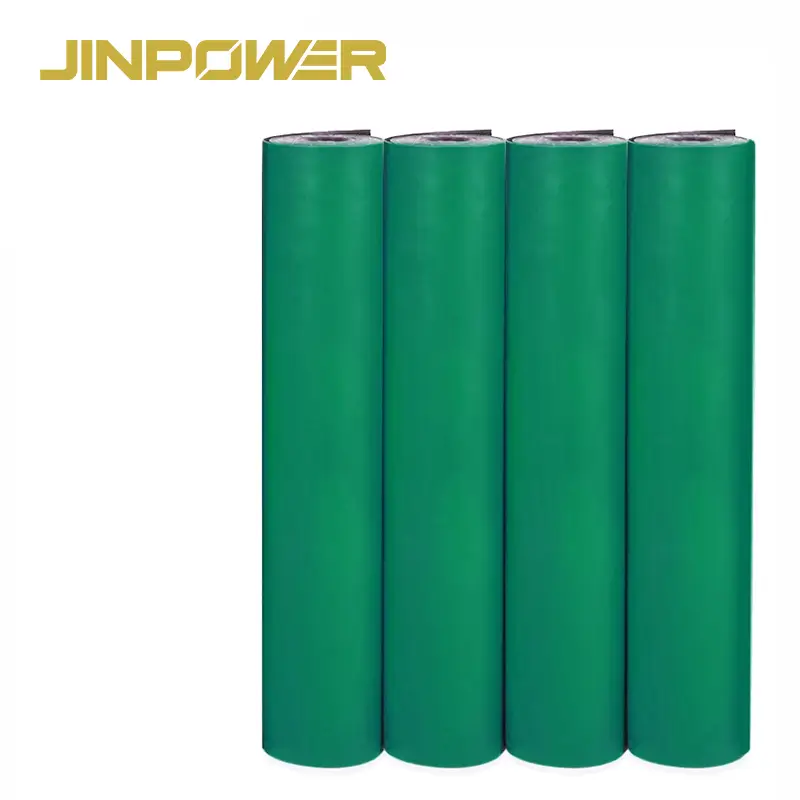

What Is an Anti-Static or ESD Floor Mat?
An anti-static floor mat—also known as an ESD floor mat—is a specialized surface covering designed to prevent or dissipate the buildup of static electricity in environments with sensitive electronic equipment. In high-risk facilities such as electronics assembly areas, server rooms, and power control centers, uncontrolled static charges can lead to component failure, data loss, or even hazardous arc discharges.
How It Works
These mats are constructed using materials with measured surface resistance, typically ranging from 10⁶ to 10⁹ ohms, allowing static electricity to discharge in a controlled, safe manner to a designated grounding point. The most common structures include:
- Two-layer mats with a conductive backing and static-dissipative top surface;
- Three-layer mats that incorporate an insulating core for additional dielectric protection.
Once properly grounded, an ESD mat becomes a controlled dissipation path in an ESD-safe area. In daily operations, it helps you:
- Neutralize static on operators, carts, tools, and mobile equipment
- Reduce charge accumulation caused by friction, airflow, movement, and material handling
- Protect static-sensitive electronics and digital control systems from nuisance faults and component damage
Professional boundary: ESD control is not the same as high-voltage insulation for shock protection. For energized switchgear safety zones, specify an electrical insulating rubber matting system separately based on your site standard and risk assessment.
Floor Mats vs Workbench Mats vs Chair Mats (Where Each Fits Best)
- ESD floor mat / anti static floor mats: for walkways, rack aisles, and standing work zones where personnel movement drives charge buildup.
- ESD bench mat / ESD mats for tables: for soldering, testing, rework, and electronics repair stations that require controlled dissipation at the work surface.
- ESD chair mat: reduces static events caused by chair movement while protecting flooring and improving mobility in ESD-controlled areas.
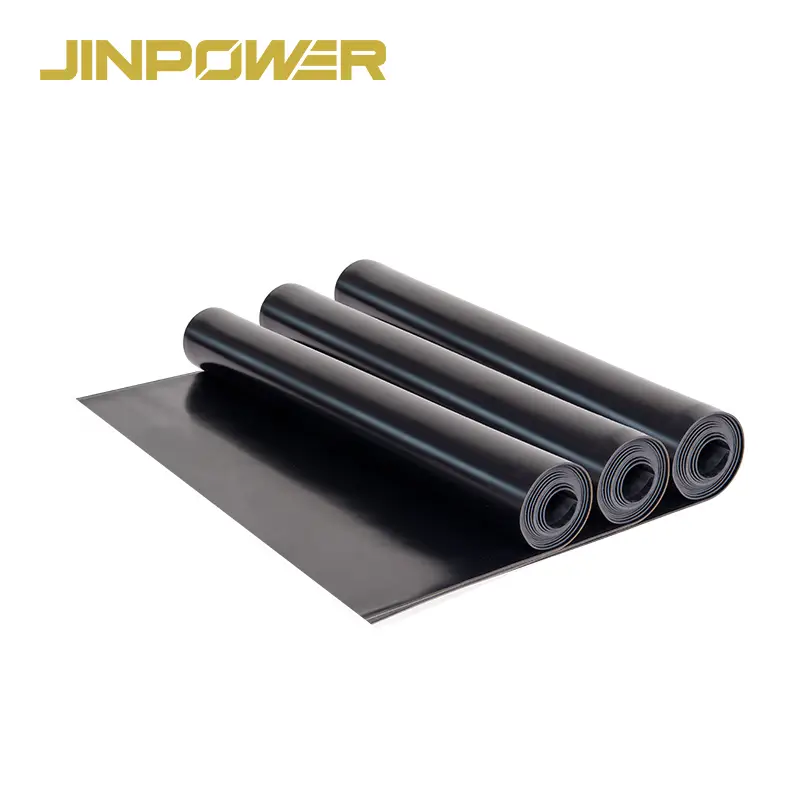
Each pad features a low-profile, non-slip surface with excellent flexibility, ensuring a secure fit on various industrial flooring types. The grey and black variants are ideal for conservative lab settings, while blue and green options support ESD zoning or color-coded safety compliance.
Whether you’re controlling static in a Class 0 electronics area or providing an insulated surface around control cabinets, this anti-static rubber pad delivers both performance and visual clarity.


2 Layers ESD Floor Mat vs 3 Layers ESD Mat (Which One to Choose?)
A 2 layers ESD floor mat typically combines a static-dissipative top layer with a conductive backing to create a reliable discharge path when grounded—widely used for ESD workbench mat, ESD table mat, and workstation protection.
A 3-layer ESD mat adds an insulative middle layer to improve dimensional stability and fit mixed environments where you want ESD control plus additional dielectric buffering.
For high traffic zones and long aisles, choose roll formats and add edge ramps for safer transitions.
ESD Mat Grounding (Earthing) — Program-Level Control, Not “Just a Wire”
An ESD mat is only as effective as the grounding and verification behind it. In a properly managed EPA (Electrostatic Protected Area), grounding provides a defined path for controlled dissipation, while verification ensures the mat stays within your required resistance range over time.
How engineering teams typically manage this:
- Qualification vs verification: qualification confirms the mat meets target performance when installed; verification checks it continues to perform during routine use.
- Measurement language: worksurface and floor programs commonly reference surface resistance terms (for example, resistance-to-ground and resistance top-to-top) to keep acceptance criteria consistent across sites.
- Audit readiness: facilities often require periodic verification records (date, location, measured values, corrective action if needed) to support internal audits and customer compliance reviews.
If you tell us your ESD program target range and grounding architecture, JINPOWER can pre-configure compatible snaps/cables and provide documentation support for your acceptance workflow.
Product Types & Custom Options
One size never fits all—especially when you’re outfitting a server room, electronics workshop, or automation line. That’s why JINPOWER offers a full range of anti-static and ESD floor mat types, tailored to your application, layout, and grounding requirements. Whether you need a mat for a single workstation or a full-facility rollout, we’ve got you covered from edge to edge—literally.
Available Mat Structures
- 2-Layer Mats
- Static-dissipative top layer
- Conductive base layer
- Ideal for workstation and bench-top use
- 3-Layer Mats
- Dissipative surface
- Insulative middle core
- Conductive backing for enhanced durability and ESD control
- Preferred in areas with mixed electrical and electronic exposure
- Anti-Fatigue ESD Mats
- Cushioned construction for prolonged standing environments
- Reduces strain while maintaining full grounding performance
- Suitable for assembly lines and lab testing zones
Format & Size Options
- Pre-cut sizes: 600×900mm, 1000×2000mm, or custom
- Roll formats: Standard widths (1m, 1.2m, 1.5m), up to 20m long
- Modular tiles: Interlocking pieces for seamless wall-to-wall installation
- Edge trims and corner ramps: Available for safety and ADA compliance
Whether you’re rolling it out under rows of data racks or placing it at an ESD workstation, you’ll find a format that fits—no scissors required (unless you really want to customize it).
Grounding and Accessories
All mat types can be equipped with:
- Snap kits (10mm or 7mm) for grounding wire connection
- Resistive ground cords for controlled static bleed-off
- Wrist strap grounding modules integrated into mat corners
- Grounding verification tags for easy compliance checks
ESD Floor Mat Kit (Typical Contents)
For faster deployment, many teams request a bundled kit format. A typical set can include:
- Mat (roll / cut workstation pad / tile set)
- Snap (7mm or 10mm) and resistive grounding cord
- Common grounding connection option (matched to your site grounding point)
- Grounding verification tag / identification label for compliance checks
- Quick instruction sheet aligned with your warehouse and installation workflow
Custom Branding & OEM Service
- Private label printing (logo, compliance rating, product code)
- Customized surface resistance classes based on IEC/ANSI requirements
- Packaging options: rolls, shrink wrap, labeled cartons with barcodes
- Multilingual instructions and technical labels for export support
From electronics factories to military labs, our customization service ensures your matting meets technical, branding, and safety expectations—down to the last ohm.
Cleaning, Lifespan & Compatibility (ESD-Safe Maintenance)
Long-term ESD performance depends on surface condition as much as the original material. In real facilities, insulating residues (dust films, certain waxes, silicone transfer, heavy flux buildup) can change surface behavior and reduce consistency—even when the mat is grounded.
For stable service life, align cleaning agents with your ESD program requirements and avoid treatments that leave insulating coatings. Replace or re-qualify mats when resistance drifts outside your internal limits, when grounding hardware becomes unreliable, or when mechanical damage (cuts, curling edges, delamination) creates safety or audit risk.
Compatibility note: if you are installing over epoxy floors, raised floor tiles, or high-traffic aisles, share your substrate and traffic conditions—so we can recommend the best construction, edge treatment, and roll/tile format.
Compliance Standards and Safety Certifications
In static-sensitive environments, ESD compliance is not a slogan—it is a repeatable control program. JINPOWER designs anti-static and ESD floor mats to support audit-ready deployment, focusing on stable resistance behavior, grounding compatibility, and documentation consistency across batches. For global projects, IEC 61340-5-1 is technically equivalent to ANSI/ESD S20.20, helping you align multinational customer and tender requirements.
International Compliance Frameworks
Our mats are engineered and tested in accordance with the following core standards:
- IEC 61340-5-1 – Protection of electronic devices from electrostatic phenomena
- ANSI/ESD S20.20 – U.S. standard for ESD control program implementation
- RoHS & REACH – Environmentally safe material use for global compliance
- ISO 9001 – Quality management system across all production lines
For projects with local tender or utility compliance needs, we can also support region-specific standards, such as:
- GB/T standards (China)
- EN 61340 series (Europe)
- ASTM D257 (U.S. materials standard for resistivity)
Factory Testing & Documentation
Every production batch undergoes rigorous in-house inspection to validate:
- Surface resistivity
- Point-to-point resistance
- Ground path continuity
- Breakdown voltage tolerance
- Mechanical wear & chemical resistance
We provide the following test and compliance documentation with shipment or upon request:
- Resistance test reports
- Material Safety Data Sheets (MSDS)
- Grounding layout recommendations
- Instruction manuals for installation & maintenance
- CE declaration (where applicable)
Certification Support for Export Projects
Whether you’re bidding on a government IT project or supplying ESD flooring to a multinational manufacturer, JINPOWER provides:
- Labeled packaging with voltage classification and resistance range
- Third-party inspection coordination
- Customized compliance labeling for local market regulations
In short, our mats don’t just protect your equipment—they also protect your business from risk exposure, audit failure, and downstream liability.
Why Choose JINPOWER as Your ESD Mat Supplier
When your operations depend on static control, you need more than just a mat—you need a partner who understands compliance, custom engineering, and the pressures of real-world deployment. At JINPOWER, we deliver not only high-quality anti-static and ESD floor mats, but also the experience, capacity, and flexibility to support your business across markets and applications.
Over a Decade of Manufacturing Expertise
- Established R&D and production lines focused on electrical safety materials
- Serving sectors from electronics to energy, telecom, automation, and defense
- Consistent output with ISO-certified quality systems and in-house lab testing
Customization Without Compromise
- Full OEM/ODM support for branding, packaging, and specifications
- Custom configurations including:
- Surface resistance values
- Material compositions (PVC, rubber, composite)
- Cut-to-size dimensions and accessory integration
- Adaptable for project needs from single-batch deliveries to multi-facility rollouts
Integrated Safety Product Portfolio
Our ESD mats are just one part of a larger ecosystem of electrical protection tools. You can easily bundle orders with:
- Insulated gloves and tools
- Grounding wires and verification devices
- Voltage detectors and hot sticks
- Rubber insulating blankets and PPE
This one-stop sourcing capability reduces your procurement workload and ensures all components are technically compatible and regulation-compliant.
Global Export & Project Support
- Export experience across Asia, Europe, Latin America, and the Middle East
- Professional documentation support for:
- Tenders
- Customs clearance
- Certification audits
- Fast lead times and responsive after-sales consulting—because downtime isn’t an option
Choosing JINPOWER means working with a technically driven, globally aware, and quality-assured manufacturer that understands your operational risks and helps you prevent them—one mat at a time.
FAQ About ESD Mats
Still have questions before choosing your anti-static or ESD floor mat solution? Here are some of the most common inquiries we receive from engineers, facility managers, and procurement teams—answered with clarity and practical insight.
Q1: What’s the difference between anti-static and ESD floor mats?
While often used interchangeably, there’s a technical distinction:
- Anti-static mats reduce the generation of static electricity, typically via friction control.
- ESD mats actively dissipate existing static charges to ground in a controlled manner.
JINPOWER’s products are designed to do both—making them suitable for electronics and electrical applications alike.
Q2: How do I ground the floor mat properly?
Most ESD floor mats use snap hardware connected to a resistive ground cord, tied to an approved earth ground or ESD ground point within your EPA. For professional deployments, grounding should be paired with routine verification (resistance and continuity records) so your ESD control program remains audit-ready. We can supply compatible snap options (7mm/10mm), ground cords, verification tags, and bundled kits based on your site standard.
Q3: Which industries benefit most from using ESD floor matting?
- Electronics manufacturing & assembly
- Server rooms and data centers
- Industrial automation and power control zones
- Medical device manufacturing
- Aerospace and telecom facilities
If your environment involves static-sensitive components or critical digital control systems, ESD matting is a must.
Q4: What is the standard surface resistance for ESD mats?
For general industry use:
- Static dissipative mats: 10⁶–10⁹ ohms
- Conductive mats: 10³–10⁵ ohms
JINPOWER offers both types, and we can match your required class or compliance range (e.g., IEC 61340, ANSI/ESD S20.20).
Q5: Can I order custom sizes, logos, or bundled accessories?
Absolutely. We support full OEM customization, including:
- Non-standard dimensions
- Custom colors and branding
- Bundled packages with grounding kits, edge trims, and printed instructions
Let us know your layout, and we’ll provide a tailored configuration.
Ready to ask us?
Send your application details and we will reply with a label-ready recommendation:
- Use area: server room / electronics line / cleanroom / power control room
- Format: ESD floor mat roll, tiles, or workstation cuts (ESD bench mat / ESD table mat)
- Grounding: snap size preference and whether you need an ESD mat grounding kit
You will receive a matched configuration, datasheet, and compliance file set to support internal approval and procurement.




 Hrvatski
 Čeština
 Dansk
Dansk Nederlands
 Filipino
 Français
 Deutsch
 Italiano
 日本語
日本語 Қазақ тілі
 ភាសាខ្មែរ
 한국어
한국어 Кыргызча
 ພາສາລາວ
 Монгол
 فارسی
فارسی Polski
 Português
 Română
 Русский
 Slovenščina
 Español
 Kiswahili
 ไทย
ไทย Українська
 Tiếng Việt
 English